Picture this: soft sunlight filtering through trees, a gentle breeze carrying the scent of flowers, and your closest loved ones gathered in nature’s embrace as you exchange vows. Outdoor weddings offer an unmatched charm and natural beauty that no indoor venue can replicate. Whether you’re dreaming of a romantic garden ceremony, an elegant vineyard celebration, or barefoot vows on the beach, outdoor weddings create magical moments that guests remember for years to come.
However, Mother Nature can be both your greatest ally and your biggest wildcard. Planning an outdoor wedding requires extra preparation, flexibility, and attention to details that indoor venues handle automatically. This comprehensive guide will walk you through everything you need to know to plan a stunning outdoor wedding that’s as seamless as it is beautiful.
Choosing Your Perfect Outdoor Setting
The first and most crucial decision is selecting the right type of outdoor venue. Each setting offers unique advantages and comes with its own set of considerations.
Beach Weddings
Beach ceremonies are timelessly romantic, offering natural beauty with minimal decoration needed. The sound of waves, endless horizons, and golden sunsets create an effortlessly stunning backdrop.
Best For: Couples who love casual elegance, intimate gatherings, and tropical or coastal vibes.
Consider: Wind can wreak havoc on decor and hairstyles. Sand makes walking in heels challenging. Permits may be required for public beaches. Sound amplification is essential as waves can drown out vows.
Garden and Botanical Venues
Gardens provide lush, colorful surroundings with built-in natural beauty. From manicured botanical gardens to private estate gardens, these venues offer romance and sophistication.
Best For: Couples who appreciate classic elegance, floral abundance, and varied photo opportunities.
Consider: Seasonal blooms dictate color schemes. Insects can be an issue. Garden paths may be narrow for large guest counts. Some flowers may trigger allergies.
Vineyard and Winery Settings
Vineyards offer rolling hills, rustic charm, and built-in sophistication. The rows of grapevines create natural aisle runners and stunning photography backdrops.
Best For: Wine enthusiasts, couples seeking rustic elegance, and those who want an all-in-one venue with lodging and catering options.
Consider: Peak harvest season may limit availability. Sun exposure requires shade solutions. Uneven terrain needs consideration for elderly guests.
Mountain and Forest Locations
Mountain venues provide dramatic backdrops and cooler temperatures. Forest settings offer intimate, enchanted atmospheres with natural canopies.
Best For: Adventure-loving couples, those seeking privacy, and anyone wanting a truly unique setting.
Consider: Accessibility can be challenging. Weather is less predictable at higher elevations. Limited cell service may complicate coordination. Wildlife might make surprise appearances.
Backyard Weddings
Private property weddings offer intimacy, flexibility, and significant cost savings. Your family home or a friend’s spacious backyard can become a personalized venue.
Best For: Budget-conscious couples, intimate celebrations, and those wanting complete creative control.
Consider: You’ll need to rent everything from chairs to portable restrooms. Parking and guest overflow require planning. Neighbors should be notified. Insurance is essential.
Timing and Seasonality: Planning Around Nature
Unlike indoor venues where climate control is guaranteed, outdoor weddings live and die by seasonal considerations and time of day.
Seasonal Planning
Spring Weddings: Mild temperatures and blooming flowers create picture-perfect settings. However, spring weather can be unpredictable with sudden rain showers. Book early as this is peak wedding season.
Summer Weddings: Long daylight hours and consistently warm weather are advantages. The heat can be intense, requiring shade, fans, and plenty of cold beverages. Humidity affects hair and makeup. Insects are most active.
Fall Weddings: Comfortable temperatures and stunning foliage provide natural decor. Weather becomes more unpredictable as winter approaches. Shorter days mean earlier ceremonies or enhanced lighting needs.
Winter Weddings: Fewer bugs, lower venue costs, and unique photo opportunities with bare trees or snow. Cold temperatures require heated spaces and warm beverages. Daylight is limited. Rain is common in many regions.
Time of Day Considerations
Morning Ceremonies: Cooler temperatures, softer lighting, and dewy freshness. Guests may struggle with early timing, especially if traveling. Brunch receptions offer unique menu options.
Afternoon Celebrations: Maximum daylight for photos and festivities. Peak heat and harsh sunlight create challenges. Consider a 4 PM start to avoid the hottest hours.
Evening Affairs: Romantic lighting as the sun sets, cooler temperatures, and dramatic photo opportunities. Requires significant lighting infrastructure. Insects become more active at dusk.
Golden Hour Timing: Schedule your ceremony 1-2 hours before sunset to capture that magical golden light. Your cocktail hour can transition into evening with string lights creating ambiance.
The Essential Backup Plan: Preparing for Weather
This is non-negotiable, every outdoor wedding needs a comprehensive weather contingency plan. Hope for sunshine, but prepare for rain. Having a detailed backup ensures your outdoor wedding runs smoothly no matter the forecast. From tents and covered seating to alternate photo spots, every detail should be ready to protect your outdoor wedding experience from unexpected weather surprises.
Tent Solutions
Tents aren’t just rain protection; they define space, provide shade, and can be stunning design elements.
Clear Top Tents: Allow guests to see the sky while staying protected. Perfect for starlit receptions. More expensive but worth the view.
Traditional Pole Tents: Cost-effective and spacious. Center poles can obstruct views and limit layout options.
Frame Tents: No center poles, offering flexible interior layouts. Sturdier in wind. Higher cost but maximum versatility.
Sailcloth Tents: Elegant and naturally beautiful with translucent fabric. Provide soft, romantic lighting during the day.
Size and Layout Planning
Calculate tent size generously. A seated dinner requires approximately 15-20 square feet per guest. Add space for the dance floor, DJ, buffet, and bar areas. Tent companies can guide you based on your guest count and needs.
When to Make the Call
Decide on a “weather call deadline” , typically 48-72 hours before the wedding. This gives you time to implement your backup plan without last-minute panic. Communicate this timeline clearly with your vendors.
Indoor Backup Venues
Some outdoor venues offer indoor spaces as backup options for your outdoor wedding. If your chosen outdoor wedding location doesn’t include one, it’s wise to identify a nearby indoor venue that can accommodate your guest count on short notice. Weather can be unpredictable, and even the most well-planned outdoor wedding can face sudden rain or wind. While you may lose your deposit, having a backup option ensures your big day continues smoothly and provides priceless peace of mind.
Practical Logistics That Make or Break Outdoor Weddings
The beauty of nature doesn’t come with built-in infrastructure. You’ll need to arrange essentials that indoor venues provide automatically.
Power and Lighting
Generators: Essential for areas without electrical access. Rent commercial-grade, quiet generators positioned away from guest areas. Calculate power needs with your caterer, DJ, and lighting designer.
Lighting Design: As daylight fades, proper lighting transforms your venue from beautiful to magical. Consider string lights, uplighting on trees, pathway lighting, and spotlights on key areas. Work with a professional lighting designer for best results.
Emergency Lighting: Battery-powered backup lights ensure safety if weather knocks out power.
Restroom Facilities
Unless your venue has permanent facilities nearby, you’ll need to rent portable restrooms. Luxury restroom trailers offer a far superior experience than standard port-a-potties.
Quantity: Plan for one restroom per 50 guests for events under four hours. Add more for longer celebrations or if alcohol is served.
Placement: Position restrooms close enough for convenience but far enough that they’re not visible in photos. Ensure pathways are well-lit and clearly marked.
Amenities: Luxury trailers often include climate control, running water, mirrors, and elegant interiors that match your wedding aesthetic.
Parking and Transportation
Parking Assessment: Visit your venue at similar timing to your wedding to assess parking availability. If on-site parking is limited, arrange shuttle service from nearby lots.
Valet Service: For venues with challenging parking, valet service elevates the guest experience and maximizes space efficiency.
Directional Signage: Clear, beautiful signage guides guests from parking to ceremony and reception areas. This is especially important for venues with multiple buildings or large properties.
Climate Control
Heating: For cool-weather weddings, patio heaters, fire pits, and heated tents keep guests comfortable. Provide pashminas or blankets with a note suggesting guests “cozy up.”
Cooling: Summer weddings require fans, misting stations, parasols for guests, and plenty of cold beverages. Consider the timing carefully to avoid peak heat.
Decor That Enhances Natural Beauty
The biggest mistake couples make with outdoor weddings is over-decorating. Nature provides stunning backdrop; your decor should complement, not compete.
Work With Your Surroundings
Beach Weddings: Keep it simple with flowing fabrics, driftwood elements, and tropical flowers. Avoid decor that wind can topple. Weight everything down , from ceremony programs to centerpieces.
Garden Settings: Let the existing flowers and greenery shine. Add subtle touches like hanging glass votives, delicate table runners, and complementary floral arrangements.
Rustic Venues: Incorporate natural elements like wood, burlap, and wildflowers. Mason jars, vintage furniture, and string lights enhance the countryside charm.
Ceremony Decor
Aisle Markers: Rose petals (weighted down), lanterns, potted plants, or shepherd hooks with florals line the aisle. Avoid anything wind can scatter.
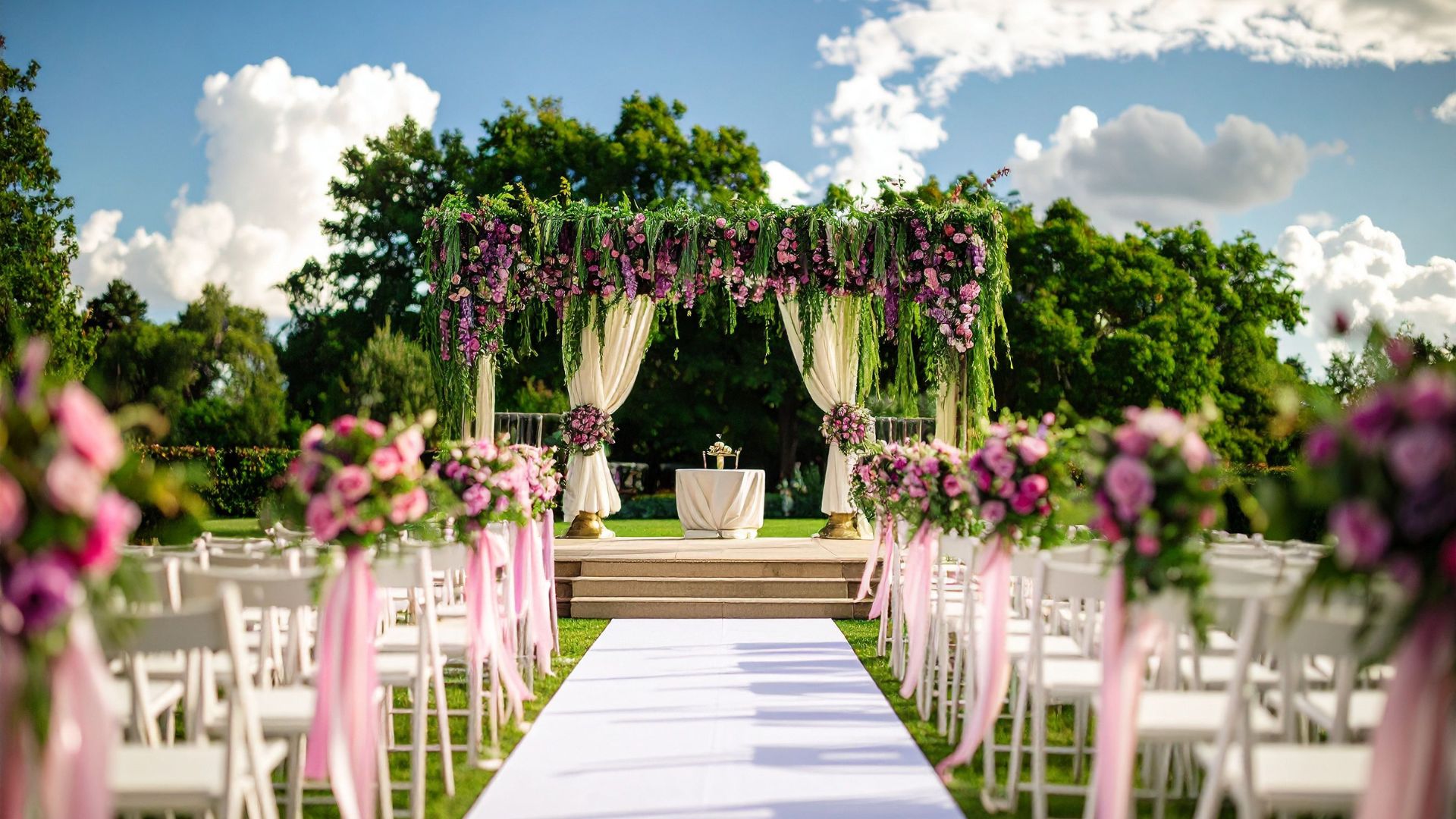
Altar/Arch: A floral arch, wooden arbor, or fabric draping creates a focal point. Position it to take advantage of your best view.
Seating: White folding chairs are classic, but consider natural wood chairs, hay bales with cushions, or vintage mismatched seating for personality.
Reception Styling
Centerpieces: Keep them low or very high so they don’t obstruct conversation. Use heavy bases to prevent tipping. Incorporate seasonal elements like pumpkins, seashells, or fresh herbs.
Table Linens: Choose fabrics appropriate for your setting. Light, flowing materials suit beach weddings while heavier linens work for formal garden affairs.
Lighting: String lights create instant ambiance. Add candles in hurricane lamps to prevent them from blowing out. Lanterns scattered throughout create a warm glow.
Guest Comfort: The Details That Matter
Comfortable guests are happy guests. These thoughtful touches show you’ve considered their experience.
Communication is Key
Save the Dates: Mention it’s an outdoor celebration so guests can plan accordingly. Include venue specifics in your wedding website.
Invitations: Suggest appropriate attire. “Garden party attire” or “beach formal” helps guests dress appropriately for outdoor settings.
Weather Updates: Create a wedding website or group message to share weather forecasts and any last-minute changes.
Comfort Essentials
Shade: Provide shade for ceremony seating with umbrellas, tents, or natural tree cover. Guests shouldn’t be squinting into the sun during your vows.
Seating: Cushions for ceremony chairs add comfort, especially for longer ceremonies. For beach weddings, consider flip-flop baskets so guests can remove heels.
Refreshments: Offer cold water or lemonade as guests arrive, especially for warm-weather weddings. Set up stations throughout your venue.
Bug Protection: Provide insect repellent in elegant dispensers. Citronella candles add ambiance while deterring mosquitoes. Schedule fumigation the day before if needed.
Sunscreen: For daytime events, offer SPF in your restrooms. Your guests’ comfort (and lack of sunburn) will be appreciated.
Accessibility Considerations
Pathways: Ensure grass is mowed and paths are clear. Create firm pathways with outdoor carpet or wooden walkways for wheelchairs and walkers.
Terrain: If your venue has hills or uneven ground, provide clear warnings and assistance as needed.
Seating Options: Offer various seating options at the reception for guests who need more support.
Vendor Selection for Outdoor Events
Not all wedding vendors have equal outdoor experience. Choose professionals who understand the unique challenges.
Questions to Ask Potential Vendors
Caterers:
- What equipment do they need? Many require electricity, water access, and covered prep areas
- How do they keep food at safe temperatures outdoors?
- What’s their experience with outdoor events in various weather conditions?
- Do they have backup plans for equipment failure?
Photographers:
- Request examples of outdoor weddings they’ve shot in similar settings
- How do they handle harsh sunlight or low-light situations?
- What’s their backup plan for rain?
Florists:
- Which flowers hold up best in heat, humidity, or cool weather?
- How do they secure arrangements against wind?
- What’s their setup timeline given weather considerations?
Musicians/DJs:
- What weather protection do they require for equipment?
- Do they have battery-powered backup systems?
- How do they handle wind interfering with sound?
Coordinator is Essential
An experienced wedding coordinator or day-of coordinator is not optional for outdoor weddings. They’ll manage the countless moving pieces, coordinate vendor arrival and setup, implement backup plans if needed, and handle unexpected issues while you focus on enjoying your day.
Sound Considerations
Outdoor venues lack walls to contain and project sound, creating unique challenges.
Ceremony Audio
Microphones: Essential for outdoor ceremonies. Even small gatherings benefit from amplification. Wind, traffic, and natural sounds compete with vows.
Sound Checks: Schedule these the day before if possible, or early on your wedding day. Test from different guest seating positions.
Officiant and Readings: Provide microphones for your officiant and anyone doing readings. Handheld or lapel mics work well.
Reception Sound
Music Volume: Outdoor venues require more power to achieve the same volume as indoor spaces. Ensure your DJ or band has experience with outdoor acoustics.
Noise Ordinances: Research local noise restrictions. Many areas have strict cutoff times for outdoor events. Confirm your venue’s policies.
Strategic Speaker Placement: Position speakers to direct sound toward your party and away from neighbors or sensitive areas.
Timeline Adjustments for Outdoor Events
Outdoor weddings require different timing than indoor celebrations.
Extended Setup Time
Give vendors extra setup time. Weather, terrain, and lack of permanent infrastructure mean everything takes longer. Start setup earlier than you would for an indoor venue.
Photography Timing
Work with your photographer to identify the best natural lighting times. Golden hour photos are magical but require scheduling other events around this window.
Buffer Time
Build in 15-30 minute buffers between events. Outdoor transitions take longer, and you may need to move guests to a backup location if weather turns.
Earlier End Times
Many outdoor venues have earlier noise curfews. Plan accordingly, or ensure your after-party can move to an indoor space or different location.
Budget Considerations
Outdoor weddings can be more or less expensive than traditional venues depending on your choices.
Where You’ll Save
- Venue rental may cost less than hotels or banquet halls
- Natural beauty reduces decor needs
- Flexible vendor selection without venue-mandated lists
- Potential to host at private property for free
Where You’ll Spend More
- Tent rental (often $2,000-$10,000+ depending on size and style)
- Additional lighting infrastructure
- Generator rental
- Portable restroom facilities (luxury trailers run $1,000-$3,000)
- Climate control (heaters or fans)
- Extended vendor hours for setup/breakdown
- Additional insurance coverage
Budget Wisely
Allocate your budget strategically. A quality tent and lighting make the biggest impact on guest experience. Professional sound ensures everyone hears your vows. These aren’t areas to cut corners.
Legal and Permit Requirements
Don’t overlook the administrative side of outdoor celebrations.
Venue Permits
Public spaces like beaches, parks, and forests often require event permits. Apply early , some popular locations book months in advance.
Noise Permits
Check if your venue requires permits for amplified music. These come with strict time restrictions.
Alcohol Licenses
If your venue doesn’t have liquor licensing, you may need a special event permit to serve alcohol.
Insurance
Many venues require event liability insurance. This protects you if accidents occur. It’s inexpensive (typically $100-$300) and well worth the peace of mind.
Final Thoughts: Embracing the Outdoor Wedding Experience
Planning an outdoor wedding requires more logistics than traditional venue celebrations, but the payoff is immeasurable. The natural beauty, fresh air, and connection to nature create an atmosphere that indoor venues simply cannot replicate.
The key to success is thorough planning, flexibility, and realistic expectations. Not everything will be perfect , a few clouds may roll in, a bug might photobomb a picture, or wind might mess up your carefully styled hair. These imperfect moments often become the stories you cherish most.
Remember that your guests aren’t critiquing logistics; they’re celebrating your love. If they’re comfortable, well-fed, and can see and hear your ceremony, everything else is just details. The weather might not cooperate completely, but your marriage is beginning regardless, and that’s what truly matters.
Outdoor weddings embody romance, adventure, and natural beauty. With careful planning and the right team beside you, your celebration under the open sky will be everything you dreamed of and more.
Here’s to blue skies, gentle breezes, and the beginning of your greatest adventure together.