Introduction
In an era where unlocking your smartphone with a glance feels like living in a sci-fi movie, biometric authentication has become the gold standard for security. From facial recognition systems at airports to fingerprint scanners on your phone, biometric technology promises convenience and ironclad protection. But what happens when the very features that make you unique become your greatest vulnerability?
Unlike passwords that can be changed or credit card numbers that can be replaced, your biometric data is permanent. Once exposed in data breaches, your identity can be exploited in ways that last a lifetime. You can’t simply get a new face or fingerprints if they’re compromised. This permanence makes biometric data breaches not just a security issue, but a lasting personal risk. As organizations worldwide adopt these systems, the threat of biometric data breaches is becoming one of the most critical challenges in modern cybersecurity.

What Is Biometric Data?
Biometric data refers to unique physical or behavioral characteristics that can identify individuals. This technology captures and stores information about:
- Facial features – Distance between eyes, nose shape, jawline contours
- Fingerprints – Ridge patterns on fingertips
- Iris and retina patterns – Unique eye structures
- Voice patterns – Speech characteristics and vocal signatures
- Palm prints and hand geometry – Hand shape and vein patterns
- DNA sequences – Genetic information
- Gait recognition – Walking patterns and movement style
- Behavioral biometrics – Typing rhythm, mouse movement patterns
Unlike traditional security methods, biometric identifiers are collected directly from your body, converted into digital templates, and stored in vast databases. These templates act as digital representations of your physical identity, making them an attractive target for data breaches. When such data breaches occur, the impact goes far beyond a simple password reset — it exposes your most personal characteristics to permanent risk. Unlike passwords or credit card details, biometric information cannot be changed once compromised. In large-scale data breaches, hackers can potentially replicate or misuse biometric templates for identity theft, unauthorized surveillance, or access to secure systems. As organizations increasingly depend on biometric technology, strengthening defenses against data breaches becomes not just important but essential for long-term digital safety.
The Growing Biometric Data Ecosystem
The biometric technology market has exploded in recent years. Financial institutions use facial recognition for account access, airports deploy iris scanners for border control, and schools implement fingerprint systems for attendance tracking. Even your favorite coffee shop might use palm print payment systems.
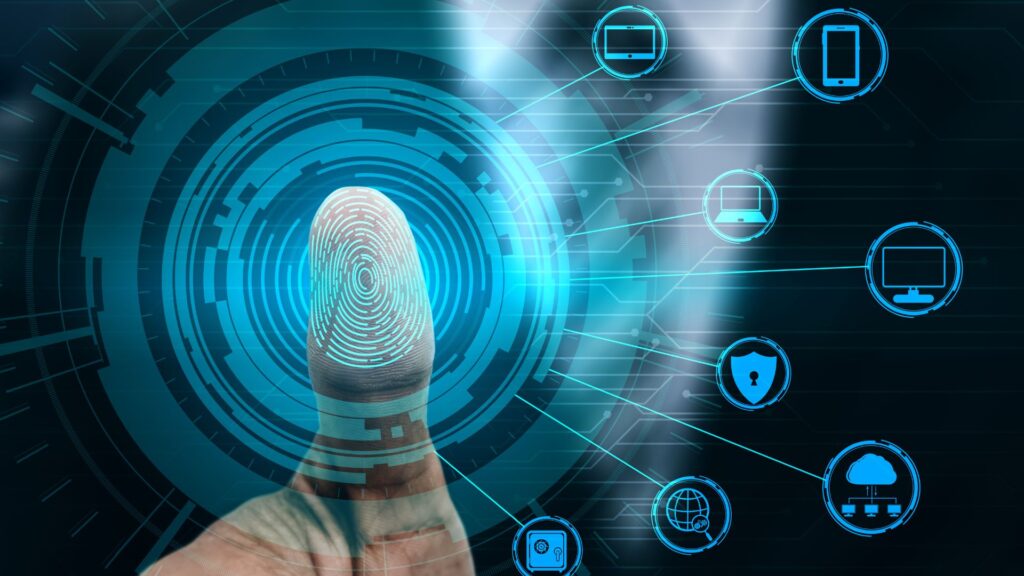
Key sectors using biometric data include:
- Banking and Finance – Mobile banking apps, ATM access, payment verification
- Government Services – Passport control, national ID systems, voter registration
- Healthcare – Patient identification, medical records access, prescription verification
- Education – Campus access, exam authentication, attendance systems
- Retail and Hospitality – Customer identification, loyalty programs, age verification
- Workplace Security – Building access, time tracking, computer login systems
- Law Enforcement – Criminal identification, surveillance systems, forensic databases
This widespread adoption creates a massive digital footprint of biometric information stored across countless databases, each representing a potential breach point.
Major Biometric Data Breaches: Real-World Incidents
The Biostar 2 Breach (2019)
One of the most alarming biometric breaches occurred when security researchers discovered an unprotected database belonging to Biostar 2, a biometric security platform. The breach exposed:
- Over 1 million fingerprint records
- Facial recognition data
- Unencrypted usernames and passwords
- 27.8 million records in total
- Access logs to secure facilities
The breach affected major organizations worldwide, including banks, police stations, and defense contractors. The unencrypted nature of the data meant that fingerprints and facial templates were stored in readable formats, making them immediately usable by malicious actors.
Aadhaar Database Vulnerabilities (India)
India’s Aadhaar system, the world’s largest biometric database with over 1.3 billion citizens, has faced multiple security in data concerns:
- Reports of unauthorized access to biometric data
- Allegations of data sold on WhatsApp groups for as little as $8
- Demographic information linked to fingerprints and iris scans exposed
- Integration with numerous services creating multiple vulnerability points
While authorities disputed some breach claims, the incidents highlighted the risks of centralizing massive biometric databases without foolproof security measures.
U.S. Customs and Border Protection Breach (2019)
A subcontractor working with U.S. Customs and Border Protection suffered a data breach that compromised:
- Facial recognition images of travelers
- License plate data
- Nearly 100,000 individuals affected
- Images copied to the contractor’s network without authorization
This incident demonstrated that biometric data isn’t only vulnerable at the collection point but throughout the entire supply chain of vendors and contractors handling the information.
Clearview AI Controversy (Ongoing)
Clearview AI, a facial recognition company, scraped over 3 billion images from social media platforms without consent. While not a traditional hack, this incident highlights how data breaches can take unconventional forms in the biometric era. The company’s massive database—built from public photos—was later exposed in one of several reported data breaches, raising serious concerns about privacy and misuse.
By collecting and storing facial images without user permission, Clearview AI blurred the line between public data collection and unauthorized surveillance. These types of data breaches demonstrate that vulnerability isn’t limited to stolen passwords or hacked servers—it can also emerge from the unregulated gathering and misuse of personal biometric information.
- Images taken from Facebook, Instagram, YouTube
- Sold to law enforcement agencies
- Minimal user consent or awareness
- Potential for misidentification and false accusations
- Database later reportedly stolen by hackers
Why Biometric Breaches Are Different from Traditional Data Breaches
Permanence of Compromised Data
When your password is stolen, you change it. When your credit card is compromised, you get a new number. But when your biometric data is breached:
- You cannot change your face or fingerprints
- The compromise lasts a lifetime
- Future systems using the same biometric are potentially compromised
- No “reset” option exists
This permanence transforms a single breach into a perpetual security vulnerability.
Cross-System Vulnerabilities
If your fingerprint template is stolen from your phone, attackers could potentially:
- Access your banking apps using fingerprint authentication
- Unlock other devices registered to your fingerprint
- Bypass security systems at your workplace
- Create synthetic fingerprints to fool physical scanners
One breach doesn’t just affect one system-it potentially compromises every system using that biometric identifier.
Identity Theft on Steroids
Traditional identity theft involves stolen information that can be disputed and corrected. Biometric identity theft presents unique challenges:
- Difficult to prove the biometric data was used fraudulently
- Legal systems struggle with biometric fraud cases
- Victims may face accusations instead of sympathy
- Recovery process unclear or nonexistent
Surveillance and Tracking Concerns
Compromised biometric data enables unprecedented surveillance capabilities:
- Track individuals across different locations using facial recognition
- Build movement patterns and behavioral profiles
- Link previously separate identities
- Enable stalking and targeted harassment
Technical Vulnerabilities in Biometric Systems
Database Security Failures
Many biometric breaches stem from basic security failures:
- Unencrypted storage – Raw biometric templates stored without encryption
- Weak access controls – Insufficient authentication for database access
- Lack of segmentation – All data in single accessible location
- Inadequate monitoring – No detection of unauthorized access attempts
- Poor vendor security – Third-party contractors with weak security practices
Template Attacks
Sophisticated attackers target the mathematical templates rather than raw biometric data:
- Template reconstruction – Converting templates back to usable biometric data
- Template manipulation – Altering templates to match different individuals
- Master fingerprints – Creating prints that match multiple templates
- Deepfakes – AI-generated faces that fool recognition systems
Presentation Attacks
Physical bypasses of biometric systems include:
- Fake fingerprints – Created from high-resolution photos or molds
- Facial masks – 3D-printed faces based on stolen images
- Contact lenses – With printed iris patterns
- Video replay attacks – Recorded footage fooling facial recognition
Algorithmic Vulnerabilities
The AI systems powering biometric recognition have inherent weaknesses:
- Bias in recognition algorithms – Higher error rates for certain demographics
- False positives – Incorrect matches leading to security breaches
- Adversarial attacks – Specially crafted inputs that fool AI systems
- Model poisoning – Training data manipulation affecting system accuracy
The Regulatory Landscape and Legal Challenges
Current Privacy Laws
Different jurisdictions treat biometric data with varying levels of protection:
European Union (GDPR)
- Classifies biometric data as “sensitive personal data”
- Requires explicit consent for processing
- Mandates data protection impact assessments
- Imposes strict storage and retention limits
United States (Fragmented Approach)
- Illinois Biometric Information Privacy Act (BIPA) – Strictest U.S. law
- California Consumer Privacy Act (CCPA) – Includes biometric data
- Texas and Washington – Limited biometric privacy laws
- Federal level – No comprehensive biometric privacy legislation
Other Regions
- India – Personal Data Protection Bill (pending)
- China – Personal Information Protection Law
- Brazil – General Data Protection Law (LGPD)
Enforcement Challenges
Regulating biometric data presents unique difficulties:
- Technology evolves faster than legislation
- Cross-border data flows complicate jurisdiction
- Lack of standardized security requirements
- Insufficient penalties for violations
- Limited resources for enforcement agencies
Legal Recourse for Victims
Individuals affected by biometric breaches face limited options:
- Class action lawsuits (if laws exist)
- Regulatory complaints
- Civil litigation for damages
- Criminal complaints (if applicable)
However, proving damages from biometric breaches remains challenging, as harm may not be immediately apparent.
Protecting Yourself in a Biometric World
Personal Security Measures
While you can’t control how organizations store your data, you can limit exposure:
Minimize Biometric Enrollment
- Question whether biometric authentication is necessary
- Use alternative authentication when available
- Limit the number of systems storing your biometric data
- Read privacy policies before enrolling
Enable Additional Security Layers
- Use multi-factor authentication beyond biometrics
- Enable PIN or password backups for biometric systems
- Set up alerts for biometric authentication attempts
- Regularly review authorized devices and access points
Monitor for Misuse
- Check for unauthorized account access
- Monitor credit reports for identity theft indicators
- Set up alerts for significant account changes
- Review privacy settings on devices and apps
Be Cautious with Social Media
- Limit public photos showing clear facial features
- Adjust privacy settings to restrict image access
- Be aware that public images can be scraped for facial recognition databases
- Consider implications before posting images
Questions to Ask Organizations
Before providing biometric data, inquire about:
- How is the data stored and encrypted?
- Who has access to the biometric database?
- How long is the data retained?
- What happens to data after account closure?
- What security measures prevent breaches?
- What notification process exists if breaches occur?
- Can I opt for alternative authentication?
Emerging Protective Technologies
New technologies aim to make biometric systems more secure:
Biometric Encryption
- Encrypts biometric templates with cryptographic keys
- Makes stolen templates useless without decryption keys
- Enables secure storage and transmission
Liveness Detection
- Verifies that biometric input comes from living person
- Prevents replay attacks and fake biometrics
- Uses behavioral analysis and physical indicators
On-Device Processing
- Stores and processes biometric data locally on user devices
- Eliminates central database vulnerabilities
- Examples: Apple’s Face ID, Android’s fingerprint authentication
Federated Learning
- Trains recognition models without centralizing data
- Improves accuracy while maintaining privacy
- Reduces breach impact by eliminating central repositories
The Future of Biometric Security
Evolving Threats
As biometric systems become more sophisticated, so do attack methods:
- AI-powered deepfakes becoming indistinguishable from reality
- Quantum computing potentially breaking biometric encryption
- Advanced social engineering targeting biometric systems
- Increased sophistication of synthetic biometric creation
Emerging Solutions
The security community is developing new approaches:
Multimodal Biometrics
- Combining multiple biometric factors
- Reducing reliance on single identifier
- Increasing difficulty of spoofing all factors simultaneously
Behavioral Biometrics
- Continuous authentication through behavior patterns
- Harder to steal or replicate than static features
- Examples: typing rhythm, mouse movement, walking gait
Blockchain for Biometric Data
- Decentralized storage reducing single-point failures
- Immutable audit trails of access
- User-controlled data sharing
Privacy-Preserving Biometrics
- Homomorphic encryption allowing processing without decryption
- Zero-knowledge proofs verifying identity without revealing data
- Differential privacy adding noise to prevent identification
Conclusion: Balancing Convenience and Security
Biometric technology offers undeniable convenience and improved security for many applications. However, the irreversible nature of biometric data breaches demands a fundamental shift in how we approach this technology. Unlike traditional hacks that can be mitigated with password changes, biometric data breaches create lifelong vulnerabilities that cannot be undone.
Organizations must treat biometric databases with security measures exceeding those for traditional data, recognizing that a single data breach can affect individuals for life. Robust encryption, decentralized storage, and continuous monitoring are no longer optional—they are essential to prevent the devastating effects of biometric data breaches. Governments, too, must enforce comprehensive regulations and establish clear global standards for biometric data collection, storage, and usage, ensuring accountability and transparency.
As individuals, we must become informed consumers of biometric technology, questioning its necessity and demanding clarity from organizations collecting our data. The convenience of unlocking your phone with your face shouldn’t come at the cost of lifetime exposure from potential data breaches.
The future of biometric security depends on creating systems that maintain ease of use while embracing privacy-by-design principles—minimizing data collection, decentralizing storage, and giving users full control over their digital identities. Until such systems become the norm, every biometric enrollment represents a calculated risk that must be approached with full awareness of the consequences.
Your face, your fingerprints, your iris patterns—they are not passwords. They are you. And once compromised in a data breach, there’s no reset button.