New York City has this reputation for draining your wallet before you even finish breakfast. And sure, hotels and taxis will cost you, but here’s what most people don’t realize until they’re already here: some of the best experiences in this city cost absolutely nothing.
When I first visited Manhattan, I budgeted heavily for museums and observation decks. Then a local told me I was doing it wrong. She pointed across the street toward the Brooklyn Bridge and said, “Start there. It’s free.” That walk changed everything. The city opened up in ways I hadn’t expected, and I realized that the free things to do in New York City for first-time visitors are often the most memorable.
This guide covers 15 genuine free attractions that let you experience the real New York without the stress of watching your budget disappear. No tourist traps. No hidden fees. Just honest recommendations from someone who’s learned which free activities actually matter.
Walk Across the Brooklyn Bridge
The Brooklyn Bridge isn’t just a bridge. It’s a 1.1-mile elevated walkway that gives you sweeping views of the Manhattan skyline, the Statue of Liberty in the distance, and the East River churning below. Start from the Manhattan side near City Hall, and you’ll join a steady stream of joggers, tourists, and locals commuting by bike.
The wooden planks under your feet have this particular sound when hundreds of people are crossing at once. You’ll notice the Gothic arches first, then the steel cables forming geometric patterns against the sky. Halfway across, stop and look back. That’s when the skyline really hits you—the kind of view that makes you understand why people move here.
Go early morning or near sunset to avoid the thickest crowds. The walk takes about 30 minutes if you’re moving steadily, but you’ll want to stop for photos. Once you reach Brooklyn, the waterfront park at the base has benches and coffee shops if you need a break.
Explore Central Park’s Hidden Corners
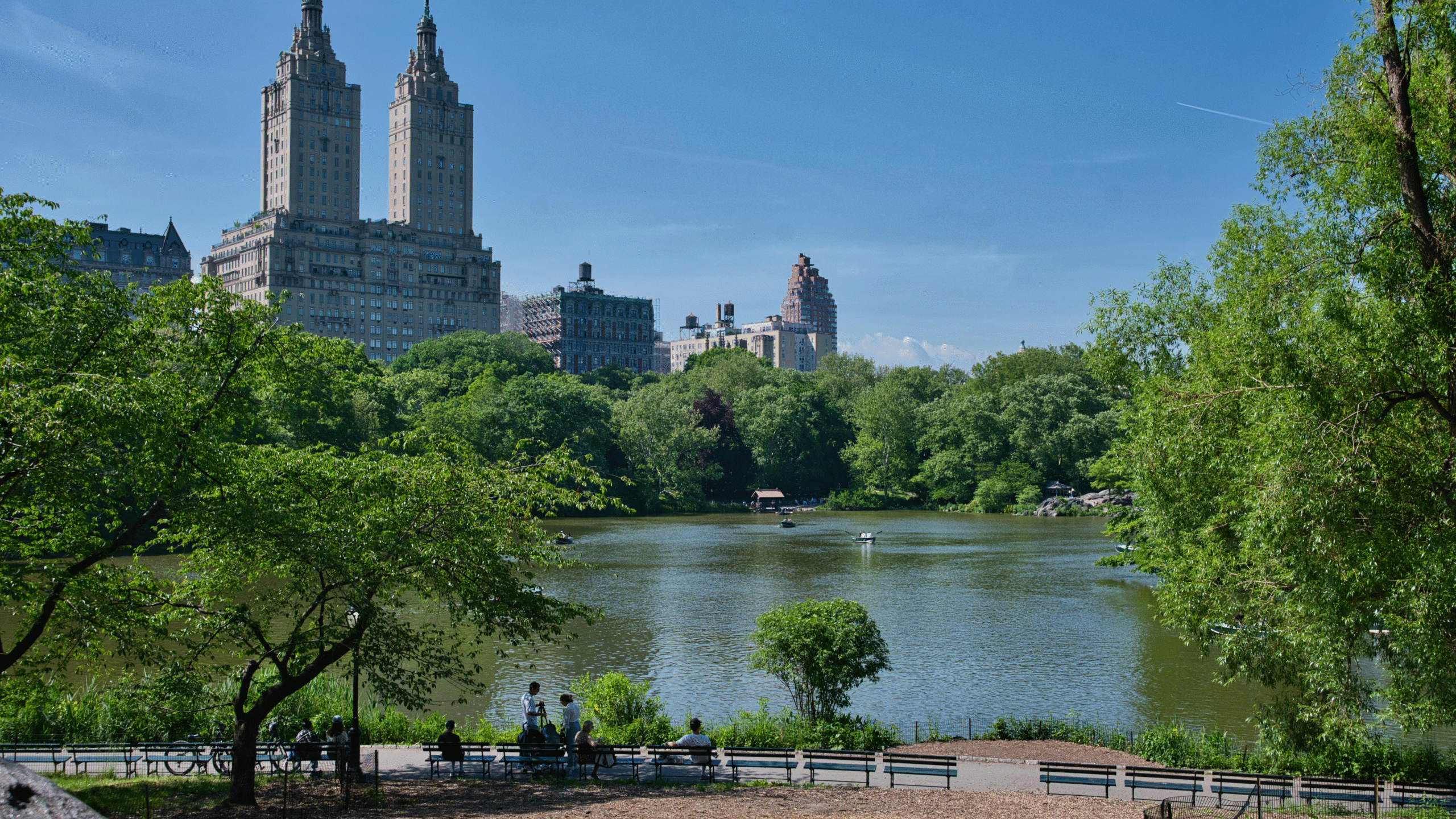
Central Park covers 843 acres, which means most first-time visitors see about 5% of it. Everyone hits Bethesda Fountain and Bow Bridge—and you should too—but the real magic happens when you wander off the main paths.
Head to the Ramble, a 36-acre woodland section in the middle of the park. The trails twist and split, and within minutes, you forget you’re in the middle of Manhattan. I’ve watched people stumble onto small ponds surrounded by massive rocks and just sit there, surprised that this kind of quiet exists here.
The Conservatory Garden at 105th Street is another free spot that most tourists skip. It’s a formal garden with seasonal flowers, fountains, and practically nobody around on weekday mornings. Spring brings tulips and cherry blossoms. Fall has these intense orange and red displays from the trees.
Strawberry Fields, the John Lennon memorial near 72nd Street, stays busy but feels different from the rest of the park. People leave flowers on the “Imagine” mosaic. Sometimes someone’s playing guitar. It’s one of those spots where the city pauses for a moment.
Visit the 9/11 Memorial
The 9/11 Memorial sits where the Twin Towers once stood, and it’s designed in a way that stops you in your tracks. Two massive square pools mark the footprints of the original buildings, with waterfalls cascading down the sides into dark voids at the center.
The names of everyone who died are engraved in bronze around the edges. On birthdays, white roses appear next to specific names—staff members place them early in the morning. I watched a woman trace her finger over a name, and the weight of the place became very real.
The museum costs money, but the memorial plaza is completely free and open to the public. Survivor Tree, a Callery pear tree that somehow lived through the collapse, stands near the south pool. It blooms every spring, which feels important somehow.
Go during the week if possible. Weekends bring tour groups, and the experience feels more reflective when you have space to think.
Take the Staten Island Ferry for Free Skyline Views
This might be the best free thing in the entire city. The Staten Island Ferry runs 24/7, costs nothing, and gives you legitimately incredible views of the Statue of Liberty and the Manhattan skyline.
The ride takes 25 minutes each way. Most people just stay on the ferry and ride it right back without even getting off in Staten Island, which is completely acceptable. The view happens during the crossing—you’ll see Lady Liberty up close on the right side of the boat heading out, then the full Manhattan skyline spreads across your view heading back.
The best spot is outside on the back deck, especially during sunset. The wind whips pretty hard, so bring a jacket even in summer. Inside seating has massive windows if the weather’s rough, and you still get the full view.
Ferries leave from Whitehall Terminal in Lower Manhattan every 15-30 minutes, depending on the time of day. It fills up with commuters during rush hour, so mid-morning or early afternoon works better for tourists.
Wander Through Times Square at Night
Yes, Times Square is overwhelming. Yes, it’s crowded with tourists and people in costume trying to charge you for photos. But if you’re visiting New York for the first time, you need to see it at least once, especially at night when every building turns into a glowing screen.
The lights hit differently after dark. Billboards the size of apartment buildings flash and move, and the entire street stays bright enough to read a book. Street performers play drums on plastic buckets, someone’s breakdancing on cardboard, and the energy feels like the city turned up to 11.
Walk through, take your photos, and keep moving. The chaos is part of the experience, but you don’t need to spend money here. Just observe. The Korean BBQ restaurant signs glow red, the Broadway theaters have their marquees lit up, and somehow the smell of roasted nuts cuts through everything else.
Best time? Around 8 or 9 p.m., when shows let out, and the crowds are moving. Avoid stopping in the middle of the sidewalk—New Yorkers will absolutely walk into you.
Free Museum Days and Pay-What-You-Wish Hours
Several major NYC museums offer free admission during specific times, which means you can hit world-class institutions without spending anything if you plan right.
The Museum of Modern Art (MoMA) has free admission every Friday from 4:00 to 8:00 p.m. The line forms early, but it moves. You’ll see Van Gogh’s “Starry Night,” Picasso, Warhol, and rotating contemporary exhibits. Four hours is enough time to cover the highlights if you stay focused.
The American Museum of Natural History operates on a suggested admission basis, meaning you can technically pay whatever you want. Most people don’t realize this. The blue whale hanging in the Ocean Hall and the dinosaur fossils make this worthwhile even if you only have an hour.
The Bronx Museum of the Arts is always free. It focuses on contemporary work, often featuring artists from the Bronx and cultural exhibitions you won’t find in Manhattan.
Walk the High Line
The High Line transformed an abandoned elevated railway into a 1.45-mile park floating above the streets of Chelsea and the Meatpacking District. Gardens grow along the tracks, art installations change seasonally, and the views shift from old industrial buildings to modern glass towers as you walk north.
Enter at Gansevoort Street and work your way up. You’ll pass through sections with wildflowers, seating areas with views of the Hudson River, and spots where the original rail tracks still show through the walkway. The design makes you feel like you’re walking through a secret garden that happens to be 30 feet above street level.
Around 10th Avenue and 17th Street, there’s a section where the High Line cuts through a building, and you can see into Chelsea Market below. Further north, the viewing platforms give you angles on the Hudson River and the New Jersey shoreline.
It gets packed on weekends, especially in nice weather. Early morning or weekday afternoons offer better crowds. The entire walk takes about 30 minutes, but most people stretch it to an hour with stops.
Experience Grand Central Terminal’s Architecture
Grand Central isn’t just a train station—it’s one of the most beautiful public spaces in the city, and you can explore it completely free. The main concourse has that famous astronomical ceiling with gold constellations painted backward (which was apparently a mistake that became permanent).
The light streams through the massive windows in these dramatic beams, especially in late afternoon. Stand in the center and just look up. The ceiling stretches 125 feet above you, and the space feels more like a cathedral than a transportation hub.
Head to the Whispering Gallery on the lower level near the Oyster Bar. Stand in one corner and have someone stand in the opposite corner. Whisper into the wall, and they’ll hear you perfectly across the entire arch. The acoustic design does something strange with sound that still surprises people.
The station has free tours on Wednesdays at 12:30 p.m., but honestly, you can explore on your own. Check out the Campbell Apartment (now a bar) if you want to see how the rich traveled back in the day, though drinks cost money. The architecture alone makes this worth the trip.
Discover Free Views from the Brooklyn Heights Promenade
Everyone talks about paying $40+ for observation decks, but the Brooklyn Heights Promenade gives you panoramic Manhattan skyline views for free. It’s a third-of-a-mile walkway hanging over the Brooklyn-Queens Expressway, with benches facing directly toward Lower Manhattan.
The view captures everything: One World Trade Center, the Brooklyn Bridge, the Financial District, and the water traffic on the East River. Sunrise here is spectacular if you’re willing to get up early. The light hits the buildings, and everything glows orange and pink for about twenty minutes.
Local joggers use this path every morning, and families bring their kids in the afternoon. There’s almost always someone with a camera set up on a tripod trying to capture the perfect shot. The best spot is in the middle section where nothing blocks your sightline.
Combine this with the Brooklyn Bridge walk—cross the bridge into Brooklyn, walk south to the Promenade, then loop back through Brooklyn Bridge Park to catch the ferry or subway home.
Explore Free Art Galleries in Chelsea
Chelsea has one of the highest concentrations of contemporary art galleries in the world, and almost all of them are free to enter. The main gallery district runs along 10th and 11th Avenues between 18th and 27th Streets.
Most galleries open Tuesday through Saturday from 10 a.m. to 6 p.m. You can walk in, look at the million-dollar artwork on the walls, and walk out without anyone expecting you to buy anything. Some spaces show emerging artists, others display established names. The variety changes every few weeks as exhibitions rotate.
I’ve seen massive sculptures that filled entire rooms, video installations that covered the walls, and paintings that made absolutely no sense but somehow kept me standing there trying to figure them out. The gallery staff usually leaves you alone unless you ask questions.
Gagosian, David Zwirner, and Pace Gallery are some of the bigger names, but the smaller galleries often have more interesting work. Just wander the blocks and step into whatever catches your eye. It’s one of the best free cultural experiences in the city.
Visit the New York Public Library Main Branch
The Stephen A. Schwarzman Building on Fifth Avenue—the one with the lion statues out front—is architecturally gorgeous and completely free to enter. The Rose Main Reading Room on the third floor is what you came for: 297 feet long with 52-foot ceilings and these enormous arched windows flooding everything with natural light.
Rows of wooden tables fill the room where people sit working on laptops, studying, or reading actual books. The ceiling has painted clouds and decorative details that you don’t notice until you look up. It’s silent except for the occasional cough or rustle of paper.
The library hosts free exhibitions in various rooms throughout the building. Past exhibits have included original manuscripts, rare maps, and historical documents. The Gutenberg Bible lives here, which is one of the most valuable books in the world.
Free tours run Monday through Saturday at 11 a.m. and 2 p.m., or you can explore on your own. The architecture alone makes this worthwhile—marble staircases, ornate ceilings, and a quiet atmosphere that feels impossible in the middle of Manhattan.
Walk Through Different Neighborhoods
New York’s neighborhoods each have completely different personalities, and walking between them costs nothing but time. Start in Chinatown, where the street signs switch to Chinese characters and the sidewalks fill with vegetable markets and dried fish hanging in windows.
Walk north into Little Italy, which is smaller than it used to be but still has the red-white-and-green flags and restaurant hosts trying to pull you inside for pasta. The smell of garlic and basil follows you down Mulberry Street.
Keep going into SoH,o where the cast-iron buildings have fire escapes zigzagging down their faces, and art galleries fill the ground floors. The cobblestone streets here remind you that the city is older than it looks.
Greenwich Village has tree-lined streets and brownstone buildings that feel residential and calm compared to Midtown. Washington Square Park has the arch, fountain, and usually someone playing chess or piano for whatever crowd has gathered.
Each neighborhood shift happens within a few blocks, and you start to understand that New York isn’t one city—it’s dozens of small cities stacked together. Walking lets you see those transitions in real time.
Catch Free Performances and Street Artists
New York has performance in its DNA. Street musicians play in subway stations, break dancers spin on cardboard in parks, and impromptu comedy shows happen on corners when someone decides they have something to say.
Washington Square Park almost always has live music—someone with a guitar, a jazz trio, or a full drum circle, depending on the day. The acoustics under the arch amplify sound naturally, so singers use it like a free concert hall.
Subway stations have designated performance spots where licensed buskers play, and some of them are legitimately talented musicians who’ve even been featured in major publications. The Atlantic Avenue–Barclays Center station and Times Square both have regular performers worth stopping for a vibe any traveler used to reading a European train guide will appreciate.
During the summer, free concerts happen in parks across the city. SummerStage in Central Park and Celebrate Brooklyn in Prospect Park host major artists for zero cost. You need to check schedules in advance, but the shows range from jazz to hip-hop to classical music.
Street performers in Times Square and Union Square sometimes draw massive crowds. The quality varies wildly, but occasionally you stumble onto something legitimately impressive—acrobats, magicians, or musicians who make you forget you’re standing on a street corner.
Visit Free Observation Points and Rooftop Spaces
You don’t need to pay for expensive observation decks to see New York from above. Several free or accessible viewpoints give you impressive skyline angles.
The Staten Island Ferry (mentioned earlier) remains unbeatable for water-level views, but DUMBO (Down Under the Manhattan Bridge Overpass) in Brooklyn has the famous Instagram shot where the Manhattan Bridge frames the Empire State Building perfectly. Washington Street between Front and Water Streets is the exact spot.
Gantry Plaza State Park in Long Island City, Queens, sits directly across the East River from Midtown Manhattan. The entire skyline spreads in front of you, including the Chrysler Building, Empire State Building, and United Nations. Sunsets here look like movie backdrops, making it a surprisingly peaceful pick even among popular winter destinations.
Roosevelt Island has a free tram ride (included with your MetroCard) that lifts you above the East River with views of Manhattan on one side and Queens on the other. The island itself is quiet and strange—a residential community that feels disconnected from the rest of the city.
The Brooklyn Bridge Park Piers (especially Pier 1) give you postcard views of Lower Manhattan and the Brooklyn Bridge from below. Locals use this for picnics and sunbathing when the weather permits.
Free Things to Do by Season and Time
New York changes dramatically depending on when you visit, and certain free activities only make sense during specific seasons. Winter brings free ice skating performances at Rockefeller Center (watching, not skating), holiday window displays along Fifth Avenue, and the New Year’s Eve ball drop if you’re willing to stand in the cold for hours.
Spring means cherry blossoms in the Brooklyn Botanic Garden (free on weekday mornings), outdoor food markets reopening, and suddenly every park fills with people who’ve been hiding inside for months.
Summer opens up free outdoor movies in Bryant Park, free concerts in Central Park and Prospect Park, and the ability to actually sit outside without freezing. The High Line becomes incredibly popular, and Brooklyn Bridge Park hosts movie nights with the skyline as a backdrop.
Fall brings perfect walking weather, fewer crowds than summer, and the trees in Central Park turning colors that make every Instagram photo look professionally edited. Halloween brings the Village Halloween Parade—a massive free event where thousands of people in costumes march through Greenwich Village while spectators line the streets.
Planning Your Free NYC Itinerary
Here’s how to structure your free NYC days efficiently:
| Time | Activity | Location | Estimated Duration |
| 8:00 AM | Brooklyn Bridge Walk | Manhattan to Brooklyn | 45 minutes |
| 9:00 AM | Brooklyn Heights Promenade | Brooklyn Heights | 30 minutes |
| 10:30 AM | Explore Free Chelsea Galleries | Chelsea, Manhattan | 2 hours |
| 1:00 PM | Walk the High Line | Chelsea/Meatpacking | 1 hour |
| 2:30 PM | Central Park (Ramble or Conservatory Garden) | Central Park | 2 hours |
| 5:00 PM | Grand Central Terminal | Midtown | 45 minutes |
| 6:00 PM | Times Square at Night | Midtown | 30 minutes |
| 7:30 PM | Staten Island Ferry (sunset) | Lower Manhattan | 1 hour round trip |
This itinerary covers major highlights while staying completely free. Adjust based on your energy level and interests, but this gives you a solid framework for experiencing New York without spending money on attractions.
Common Mistakes First-Time Visitors Make
The biggest mistake people make is thinking they need to pay for everything to have a real New York experience. Those observation deck tickets, hop-on-hop-off buses, and overpriced harbor cruises aren’t necessary when free alternatives exist.
Another error: trying to see everything in one day. New York is exhausting. Your feet will hurt. Plan 3-4 major activities per day maximum, then adjust based on how you feel. Overscheduling kills the experience because you’ll be too tired to enjoy anything.
People also underestimate walking distances. “Oh, it’s only 20 blocks” sounds manageable until you realize that’s a mile, and you’ve already walked five miles that day. Use the subway strategically, even though walking shows you more of the city.
Skipping outer boroughs is common but unfortunate. Brooklyn and Queens have incredible free attractions, better food prices, and fewer tourists. The ferry rides and subway trips to get there are part of the adventure.
Finally, not checking the weather. Summer humidity in New York can be brutal. Winter wind tunnels between buildings make it colder than the temperature suggests. Spring rain happens frequently. Check forecasts and plan indoor/outdoor activities accordingly.
Making the Most of Your Free NYC Experience
The best free experiences in New York happen when you stop trying to check boxes and just exist in the city for a while. Sit on a park bench in Washington Square and watch people. Get intentionally lost in the Village’s twisted streets. Take the subway to a random stop and explore that neighborhood — the same kind of spontaneous adventure you’d plan after saving big using cheap flight hacks.
Bring water and snacks—New York’s convenience store prices are painful. Wear comfortable shoes broken in before your trip. Blisters will end your sightseeing days early.
Talk to locals when appropriate. Most New Yorkers are surprisingly helpful if you ask direct questions. “Which way to the subway?” gets better responses than standing in the middle of the sidewalk looking confused.
Use your phone for maps, but put it away once you’re walking. You’ll see more, notice small details, and avoid looking like an obvious target for the occasional scam artist.
The magic of New York isn’t in the expensive attractions—it’s in the energy of the streets, the unexpected moments, and the feeling that anything could happen next. The free things to do in New York City for first-time visitors capture that energy better than anything you can buy a ticket for.
FAQ
Can you really experience New York City without spending much money?
Absolutely. Many of NYC’s most iconic experiences—the Brooklyn Bridge, Central Park, Times Square, the 9/11 Memorial, and the Staten Island Ferry—are completely free. Combined with free museum hours and neighborhood walks, you can spend days exploring without paying admission fees. You’ll still need money for food and transportation, but the major sightseeing won’t break your budget.
What’s the best free viewpoint for taking photos of the Manhattan skyline?
The Brooklyn Heights Promenade offers the most comprehensive free skyline view, especially for photos. DUMBO’s Washington Street gives you the famous Manhattan Bridge framing shot, and Gantry Plaza State Park in Queens provides a different angle of Midtown. For water-level views of the Statue of Liberty, the Staten Island Ferry can’t be beaten.
Are the free museum hours worth the wait?
Yes, especially for MoMA’s Friday evenings. Lines form but move steadily, and you get access to world-class art for free. Arrive 30-45 minutes before opening to secure your spot. The American Museum of Natural History’s pay-what-you-wish policy means you can visit anytime without worrying about specific hours.
How much time should I budget for walking the Brooklyn Bridge?
The walk itself takes 25-30 minutes at a steady pace, but most people spend 45 minutes to an hour when accounting for photos and stopping to take in views. Go early morning, before 9 a.m. or around sunset for the best light and smaller crowds. The Manhattan-to-Brooklyn direction gives you the skyline view in front of you.
What free activities work well in bad weather?
Grand Central Terminal, the New York Public Library, Chelsea art galleries, and various museums during free admission times all work perfectly when it’s raining or too hot/cold outside. The subway system itself counts as indoor sightseeing—some stations have impressive art installations and historical details worth checking out between destinations.