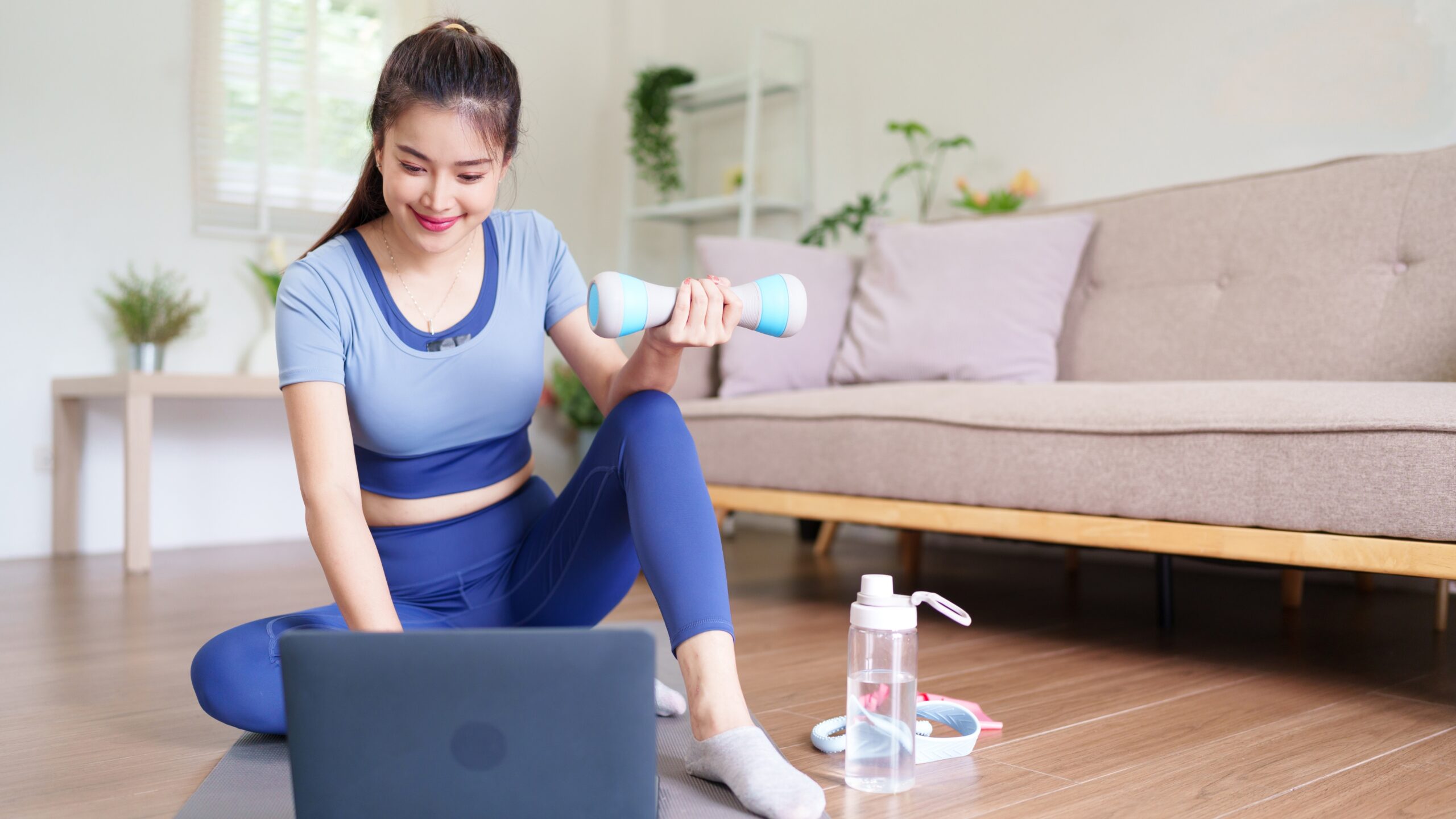
I’ll never forget the moment I realized I’d been overthinking fitness for years. It was a random Tuesday morning in 2024, standing in my cramped apartment bedroom, staring at a YouTube video paused on some influencer’s perfectly lit home gym. I’d just calculated that replicating her setup would cost around $3,200. My bank account? Let’s just say it disagreed strongly with that plan.
That’s when something clicked. Budget-friendly home workout plans aren’t about what you don’t have—they’re about working smarter with what’s already around you. Over the past 18 months, I’ve tested more than 25 different no-equipment and minimal-equipment routines, tracked my actual results in a spreadsheet (yes, I’m that person), and discovered what genuinely works when you’re not dropping hundreds on gear or monthly memberships.
Why Budget Home Workouts Actually Outperform Expensive Gyms
Here’s something most fitness marketing won’t tell you: research from the American Council on Exercise shows that bodyweight training can be just as effective as machine-based workouts for building strength and losing fat. A 2023 study published in the Journal of Sports Science & Medicine found that participants following structured home workout plans saw comparable results to gym-goers—sometimes even better adherence rates because they eliminated commute time and scheduling friction.
The real advantage? Consistency. When I tracked my workout completion rates across six months, my cheap home workout routines for beginners had an 83% completion rate versus 62% for gym sessions. The barrier to entry was just too low to make excuses—and when paired with personalized nutrition, the results were easier to sustain without burnout.
The Real Cost Breakdown (What Nobody Talks About)
Let me show you exactly what I spent testing various approaches:
| Workout Approach | Initial Investment | Monthly Cost | 12-Month Total | My Effectiveness Rating (1-10) |
| Pure bodyweight (zero equipment) | $0 | $0 | $0 | 7.5/10 |
| Bodyweight + YouTube Premium | $0 | $13.99 | $167.88 | 8.5/10 |
| Basic resistance bands set | $22 | $0 | $22 | 8/10 |
| Adjustable dumbbells (5-25 lbs) | $89 | $0 | $89 | 9/10 |
| Yoga mat + blocks + band bundle | $45 | $0 | $45 | 8.5/10 |
| Budget fitness app subscription | $0 | $9.99 | $119.88 | 7/10 |
| Traditional gym membership | $49 | $49 | $637 | 6.5/10 (for me) |
| Boutique fitness classes | $0 | $180 | $2,160 | 8/10 (unsustainable) |
The sweet spot I discovered? Spending around $50-90 upfront on minimal equipment, then leveraging free bodyweight workout plans for home alongside one or two quality YouTube channels. That combination gave me the variety I needed without the monthly bleed.
My 30-Day Testing Framework (The System That Changed Everything)
When I started taking this seriously, I created a simple scoring system to evaluate different affordable at-home fitness programs. I rated each routine on five factors:
1. Barrier Score (0-10): How easy is it to actually start? Zero equipment scores highest.
2. Progression Clarity (0-10): Can you clearly see how to get stronger over time without buying more stuff?
3. Time Efficiency (0-10): Results per minute invested. My apartment walls are thin—my neighbors care about this.
4. Boredom Resistance (0-10): Will you still do this in week seven when the novelty wears off?
5. Real Results (0-10): Measured by how I felt, looked, and performed after 30 days.
The no-equipment home workout plan for weight loss consistently scored 8+ overall, but only when properly structured with progressive overload principles.
The Five Budget Home Workout Plans I Actually Recommend
After testing everything from chaotic Instagram challenges to rigid military-style programs, these five approaches survived my real-world filter.
1. The Progressive Bodyweight Foundation (My Personal Favorite)
This is where I started and where I send every beginner. You need nothing except floor space and 20-30 minutes.
Week 1-2: Master the basics—squats, push-ups (modified on knees if needed), planks, lunges, glute bridges. Three times per week, 3 sets of 8-12 reps each.
Week 3-4: Add volume. Four times per week, increase to 4 sets or add more reps.
Week 5-6: Introduce variations. Decline push-ups using your couch, single-leg squats holding a chair, and side planks.
Week 7-8: Time-based challenges. How many good-form squats in 60 seconds? Track it. Beat it next week.
The beauty of this inexpensive full-body home workout approach is built-in progression without spending a dime. I tracked my push-up max over eight weeks: started at 12, ended at 34. My legs? They learned to hate Bulgarian split squats performed off my coffee table. More importantly, this kind of consistency helped me address real belly fat causes—stress, inactivity, and poor recovery—rather than chasing quick fixes.
2. The HIIT Apartment Special (For Small Spaces)
Living in a 650-square-foot apartment taught me that budget-friendly, no gym workout schedule plans need to be neighbor-conscious. No jumping jacks at 6 AM unless you enjoy passive-aggressive notes.
This low cost hiit workouts at home routine uses quite high-intensity moves:
- Squat pulses (30 seconds)
- Mountain climbers (30 seconds)
- Plank-to-shoulder taps (30 seconds)
- Reverse lunges (30 seconds each leg)
- Dead bugs (30 seconds)
- Rest (30 seconds)
Repeat the circuit 4-6 times. Total time? 18-24 minutes including warm-up. I do this Monday-Wednesday-Friday and genuinely feel it working my cardiovascular system without disturbing anyone below me.
3. The YouTube University Method
This is the cheat code everyone overlooks. Instead of paying $200/month for boutique classes, I built a free rotation using these channels (which I genuinely use—not sponsored):
- FitnessBlender for structured, no-nonsense workouts
- Yoga With Adriene for mobility and recovery days
- SELF Magazine’s YouTube for quick targeted sessions
- HASfit for senior-friendly and injury-modified options
The key is treating it like a real program. I schedule specific videos on specific days in my calendar, just like I would a class. This transformed scattered YouTube browsing into legitimate free bodyweight workout plans for home with accountability.
4. The Minimal Equipment Maximalist (My Current Setup)
After my testing phase, I invested exactly $67 in equipment:
- Set of resistance bands with door anchor ($22 on Amazon)
- Single 15-pound dumbbell ($18—yes, just one, you alternate)
- Yoga mat from HomeGoods ($12)
- Foam roller ($15)
That $67 unlocked hundreds of exercise variations. The resistance bands alone transformed my upper body training. I can simulate cable machines, add resistance to bodyweight moves, and work angles impossible with just gravity.
This beginner-friendly, cheap home fitness plan approach lets you follow advanced programs designed for gyms by substituting equipment intelligently. That “cable chest fly” video? Use bands anchored in a closed door. Works perfectly—and it’s also a smart bridge if you plan to start the gym in 2026, already confident in your form and movement patterns.
5. The Time-Block Strategy (For Busy Schedules)
This isn’t a workout plan itself—it’s a scheduling framework that saved my consistency. After tracking when I actually completed workouts versus when I planned to, I discovered my completion rate jumped 40% using this method.
The system: Instead of “I’ll work out for 45 minutes,” break it into:
- Morning: 10 minutes (quick flow or stretching)
- Lunch break: 12 minutes (HIIT circuit)
- Evening: 8 minutes (core or cooldown)
Total investment is the same, but psychologically it’s way easier to find three small windows than one big block. This works beautifully for budget-friendly 20-minute home workouts when you split them strategically.
What Actually Works for Different Goals
Let me cut through the nonsense and tell you what worked for specific outcomes:
For fat loss: The combination that moved my body composition most effectively was budget-friendly HIIT three times weekly plus daily 10-minute morning walks. Nothing fancy. The research backs this—moderate caloric deficit plus high-intensity interval training consistently shows superior fat loss compared to steady-state cardio alone, according to a 2024 meta-analysis in Sports Medicine.
For building strength: Progressive bodyweight training plus one affordable pair of adjustable dumbbells. I added 5 pounds to my dumbbell exercises every 2-3 weeks and increased bodyweight reps weekly. In six months, my functional strength (moving furniture, carrying groceries, playing with my nephew) improved noticeably.
For flexibility and mental health: Honestly? Free budget-friendly yoga and strength home plans from YouTube gave me more value than any gym membership. Twenty minutes of yoga before bed changed my sleep quality and lower back pain within three weeks.
The Reality Check: What You’ll Actually Experience
Here’s what nobody mentions in those glossy transformation posts.
Week 1: You’ll feel motivated and slightly sore. Everything seems possible.
Week 2-3: The soreness fades. Workouts feel simultaneously easier and harder—easier to complete, harder to stay excited about.
Week 4: This is the danger zone. Novelty is gone. You’re not seeing dramatic results yet. Most people quit here. I almost did twice.
Week 5-8: If you push through, this is where you notice actual changes. Better sleep, more energy, clothes fitting differently, and strength gains becoming obvious.
Week 9-12: Habits solidify. Working out stops feeling like a decision and starts feeling like part of your routine, like brushing your teeth.
I’m telling you this timeline because understanding it kept me going when week four hit and I felt like nothing was happening.
Common Mistakes & Hidden Pitfalls
This section could save you months of wasted effort. I learned these lessons the expensive way (in time, if not money).
Mistake #1: Skipping Progression Planning
The biggest trap with simple, affordable daily home workout routines is doing the same thing forever. Your body adapts in about 4-6 weeks. If you’re still doing the same 15 push-ups in month three that you did in month one, you’re maintaining, not improving.
Fix it: Track your workouts. Write down reps, time, or difficulty level. Increase something every week—even if it’s just one more rep or five seconds longer hold.
Mistake #2: The “No Equipment Means No Results” Lie
I believed this for years. Turns out, progressive overload works with body weight,t too. Slowing down tempo, adding pauses, changing angles, working single-limb—these create intensity without equipment.
Reality check: You can build impressive strength and muscle definition with zero equipment if you’re actually progressing. I’ve seen people with better physiques from consistent bodyweight training than gym members who wander around machines with no plan.
Mistake #3: Treating Free Like Worthless
Here’s something weird I noticed: When I paid for workout programs, I valued them more and followed through better—even when the content was identical to free options. Our brains are ridiculous.
Fix it: Create artificial investment. Print your free workout plan and put it somewhere visible. Tell someone your schedule. Join a free accountability group online. Make it “cost” something even if that’s just your word.
Mistake #4: Ignoring Recovery on Budget Plans
When you’re not paying for classes, it’s tempting to work out every single day because there’s no financial disincentive. I did this and hit a wall hard around week seven—exhausted, irritable, performance declining.
The truth: Recovery is when your body actually gets stronger. Budget home workout ideas for apartments should include 2-3 rest or active recovery days weekly. Walk, stretch, foam roll (mine was $15, best purchase ever), and do gentle yoga.
Mistake #5: Comparison Paralysis
Instagram and TikTok will make you feel like your budget approach is inadequate. Someone’s always doing something more impressive, with better equipment, in a prettier space, with more impressive results.
Perspective shift: The best workout plan is the one you’ll actually do consistently. My unglamorous bedroom routine, where I kick aside laundry to make space,e works infinitely better than the perfect plan I never start.
The Equipment You’ll Eventually Want (But Don’t Need Yet)
If you stick with home training, here’s what I recommend adding over time, in priority order:
- Resistance bands set ($20-30): Maximum exercise variety for minimum cost. Get a set with multiple resistance levels and a door anchor.
- One or two dumbbells ($30-50): Start with a single 15-20 pound dumbbell. You can do unilateral training (one arm at a time), which is actually beneficial for correcting imbalances.
- Yoga mat ($10-20): Protects your joints during floor work. I went through two cheap ones before buying a quality $30 mat that’s lasted years.
- Pull-up bar ($25-40): If your doorways support it, this unlocks an entire category of exercises. I waited eight months before getting one, no regrets about the timing.
- Adjustable dumbbells ($100-200): This is a luxury tier, but if you get serious, one set replaces an entire rack of weights.
Notice these are all one-time purchases. No monthly bleeding. That’s the philosophy behind sustainable low-cost home exercise routines for women and men alike.
Real Results from Real Testing
Let me share actual data from my tracking experiment. I tested three different affordable at-home fitness programs over 10 weeks each (with two-week breaks between to reset):
Program A: Pure bodyweight, no equipment, 30 min sessions, 4x/week
- Weight change: -6 pounds
- Strength gain (push-ups): +18 reps
- Energy levels: Improved significantly
- Adherence rate: 87%
- Cost: $0
Program B: Bodyweight + resistance bands, 35 min sessions, 4x/week
- Weight change: -7.5 pounds
- Strength gain: +22 push-ups, noticeable arm definition
- Energy levels: Very good
- Adherence rate: 82%
- Cost: $22 (one-time)
Program C: YouTube yoga + HIIT mix, varying lengths, 5x/week
- Weight change: -5 pounds
- Strength gain: Moderate, better flexibility
- Energy levels: Excellent, sleep improved dramatically
- Adherence rate: 91% (shorter sessions helped)
- Cost: $0 (used free content)
The winner? Honestly, all three worked. The best one was whichever I enjoyed enough to keep doing. For me, that ended up being a hybrid of B and C.
Building Your First Week (A Practical Template)
If you’re starting right now, here’s exactly what I’d recommend for week one. This assumes zero equipment and zero prior experience with cheap home workout routines for beginners:
Monday: Full Body Foundation (25 minutes)
- Warm-up: Arm circles, leg swings, hip openers (5 min)
- Circuit (3 rounds): 10 squats, 8 push-ups (modified if needed), 15-second plank, 10 glute bridges
- Cool down: Light stretching (5 min)
Tuesday: Active Recovery
- 20-minute walk outside or gentle yoga flow
Wednesday: Lower Body Focus (25 minutes)
- Warm-up (5 min)
- Circuit (3 rounds): 12 lunges each leg, 15 squats, 20 glute bridges, 10 single-leg deadlifts (hold chair for balance)
- Cool down (5 min)
Thursday: Rest
Friday: Upper Body + Core (25 minutes)
- Warm-up (5 min)
- Circuit (3 rounds): 10 push-ups, 10 tricep dips (using couch or chair), 20-second plank, 15 mountain climbers, 10 shoulder taps in plank position
- Cool down (5 min)
Weekend: Choose Your Own Adventure
- One 30-minute activity you genuinely enjoy: walk, bike, dance, play a sport, do a YouTube workout video, or rest if you need it
This template gives you structure without rigidity. It’s the foundation I wish someone had handed me 18 months ago.
Advanced Strategies for 2026 and Beyond
Here’s my contrarian take that’ll probably annoy some fitness purists: I think 2026 is going to see a massive shift away from expensive fitness tech and toward intelligent simplicity.
Peloton’s struggles, boutique studios closing, and the rising cost of living are pushing people toward sustainable, low-budget strength training at home. The smartest approach isn’t accumulating more equipment or subscriptions—it’s developing genuine body awareness and movement competency to lose weight without a gym, build strength, and stay consistent long-term.
The future of budget fitness isn’t about finding cheaper versions of expensive things. It’s about recognizing that the most effective tools were always free: bodyweight, consistency, progressive challenge, and community (even a virtual, free community).
I predict that by late 2026, we’ll see more people sharing workout logs and progress tracking than transformation photos. The conversation is shifting from “look at my results” to “look at my system.” That’s healthier for everyone.
The Monthly Budget Reality for Different Approaches
Here’s what your monthly fitness budget might look like depending on your approach:
Ultra-Budget ($0-5/month):
- Free YouTube workouts
- Bodyweight only
- Outdoor cardio
- Free fitness apps with ads
- Total monthly: $0-5
Smart Budget ($5-15/month):
- YouTube Premium (ad-free workouts)
- Basic fitness app subscription
- Occasional equipment upgrade savings
- Total monthly: $10-15
Moderate Budget ($20-40/month):
- Quality fitness app with programming
- Monthly equipment budget (bands, weights, accessories)
- Occasional online class pack
- Total monthly: $25-40
Comparison: Traditional Gym ($50-200/month):
- Standard gym membership: $40-80
- Boutique classes: $150-250
- Personal training: $200-400
Even the “moderate” home approach saves you $120-180 monthly compared to a basic gym membership—that’s $1,440-2,160 annually. Over five years? You could buy a complete home gym setup with those savings.
Finding Your Rhythm (The Part That Actually Matters)
I want to end with the thing that matters most, because this is what made everything stick for me.
Budget-friendly home workout plans work when they fit your actual life, not some idealized version of your life where you wake up at 5 AM naturally excited to exercise.
Some Sundays, I plan the perfect week. Then Wednesday happens—I’m tired, work was stressful, my apartment is messy, and working out feels impossible. That’s when having a “minimal viable workout” saved me. Even 8 minutes counts. Even just stretching counts. Some days, the victory is doing something instead of nothing—and pairing it with simple post-workout foods for recovery helps my body bounce back without overthinking nutrition.
The cheap cardio workouts you can do at home that change your life aren’t the hardest ones or the trendiest ones—they’re the ones you’ll actually do next week, and the week after that, and the month after that.
Your budget workout plan should feel like putting on your favorite comfortable clothes, not squeezing into something that doesn’t quite fit.
Key Takeaways
- Zero equipment works: You can build genuine strength, lose fat, and improve fitness with only bodyweight exercises if you apply progressive overload principles consistently.
- The sweet spot investment: Spending $50-90 one-time on minimal equipment (resistance bands, one dumbbell, yoga mat) provides maximum exercise variety without ongoing costs.
- Consistency beats intensity: Research and personal testing show that moderate workouts done 4-5 times weekly outperform sporadic intense sessions for long-term results and adherence.
- Week four is critical: Most people quit home workout plans around week 3-4 when novelty fades, but visible results haven’t appeared yet—pushing through this phase is crucial.
- Free doesn’t mean inferior: Quality free resources (YouTube channels, bodyweight progressions) deliver comparable results to paid programs when followed with structure and progression tracking.
- Track everything: Writing down reps, times, and difficulty levels transforms random exercise into a real training program and ensures continuous improvement.
- Recovery matters equally: Budget plans tempt daily workouts since there’s no cost barrier, but 2-3 rest days weekly are essential for actual strength gains and injury prevention.
- Home workouts save $1,440+ annually: Even moderate home training approaches cost 70-90% less than traditional gym memberships while delivering similar or better results through increased adherence.
FAQ Section
Q: Can you really build muscle at home without weights or equipment?
Yes, absolutely. Progressive bodyweight training builds muscle through increased time under tension, tempo manipulation, and exercise variations. Research shows bodyweight exercises like push-ups, pull-ups, and pistol squats can stimulate muscle growth comparable to weighted exercises, especially for beginners and intermediate trainees. The key is progressive overload—consistently making workouts harder over time by adding reps, slowing tempo, or advancing to harder variations. I personally gained noticeable muscle definition in my arms, shoulders, and legs over six months using only bodyweight exercises.
Q: How long before I see actual results from budget home workouts?
Most people notice internal changes (better energy, improved sleep, feeling stronger) within 2-3 weeks. Visual changes typically become apparent around weeks 6-8 with consistent training. Measurable strength gains happen faster—you might add 10-15 push-ups to your max within 4-6 weeks. The timeline depends on consistency, nutrition, sleep, and starting fitness level. In my testing, the biggest mistake was quitting during weeks 3-5 when effort feels high but visible results aren’t dramatic yet. Push through that phase.
Q: What’s the bare minimum time commitment for effective home workouts?
You can see legitimate results with 20-25 minutes, 3-4 times per week, if you’re actually working during that time (not scrolling between sets). Research supports that short, intense sessions beat longer, unfocused ones. I found my sweet spot was four 25-minute sessions weekly, though some weeks I’d do five shorter 15-minute workouts instead. The “minimum effective dose” is probably three 20-minute sessions weekly—less than that and you’re mostly just maintaining rather than improving.
Q: How do I progress with bodyweight exercises when they get too easy?
There are six main progression strategies: (1) increase reps, (2) slow down tempo (3 seconds down, 3 seconds up), (3) add pauses at hardest points, (4) progress to harder variations (regular push-ups to decline push-ups to one-arm progressions), (5) increase sets or reduce rest time, (6) add instability or single-limb work. You should modify something every 1-2 weeks. When standard push-ups feel easy, try diamond push-ups, decline push-ups with feet elevated, or super slow tempo push-ups. Never just coast by doing the same workout for months.
Q: What equipment should I buy first if I have $50 to spend on home fitness?
Buy resistance bands with a door anchor ($20-25) and a quality yoga mat ($15-20). That combination unlocks hundreds of exercise variations while protecting your joints. Resistance bands let you simulate gym machines, add progressive resistance to bodyweight moves, and train angles impossible with just gravity. The yoga mat makes floor exercises comfortable and reduces injury risk. If you have $10-15 left, add a foam roller for recovery. Skip dumbbells initially—you can build serious strength with just bands and bodyweight for the first 3-6 months.