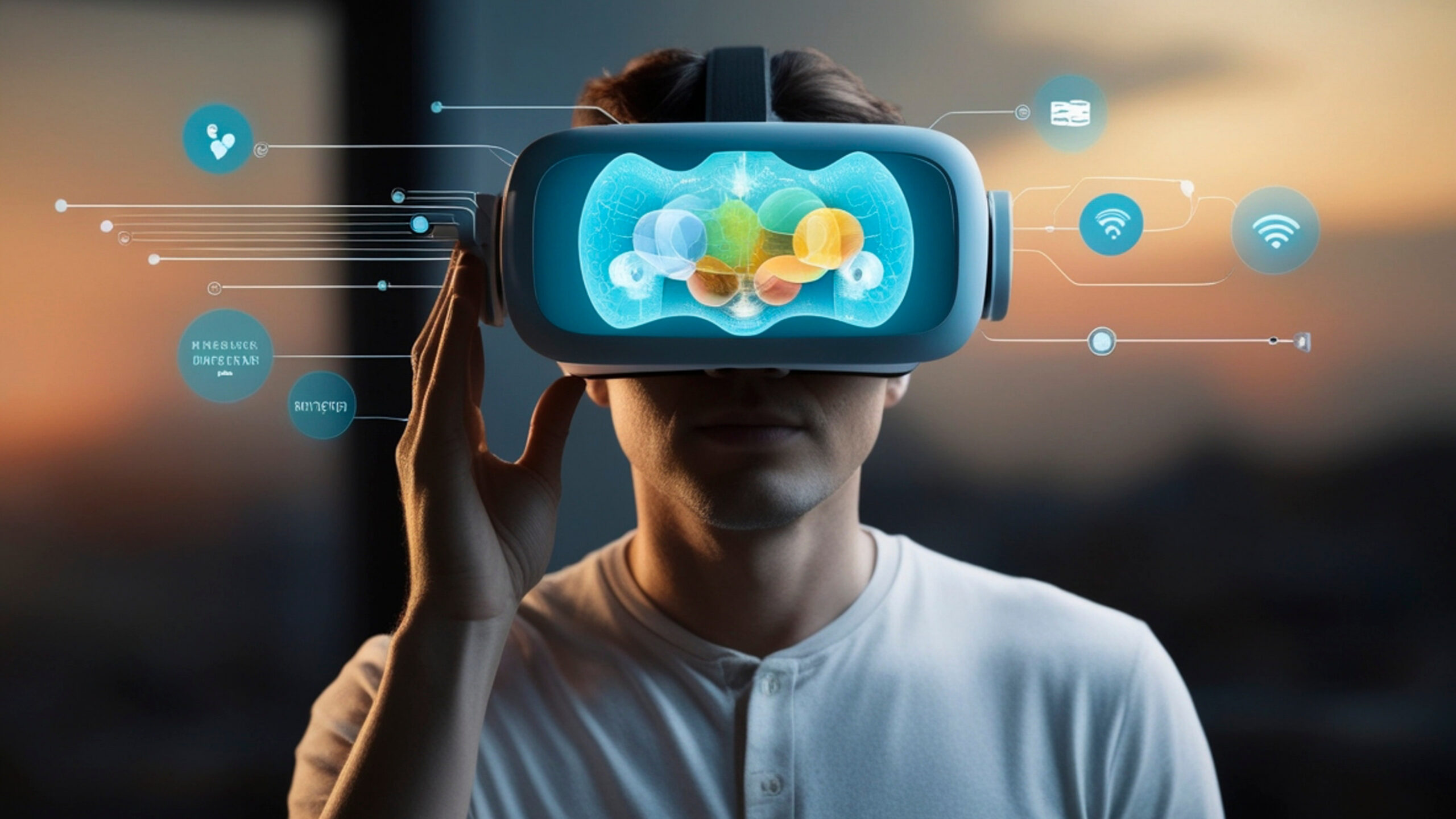
I’ll never forget the moment Emma, one of my quietest tenth-graders, suddenly yanked off her Oculus Quest 3 headset and shouted, “Wait, I actually understand mitosis now!” She’d been struggling with cell division for weeks, but after ten minutes navigating a gamified VR biology simulation where she literally became a cell moving through different phases, something clicked. That’s when I realized gamified learning with VR isn’t just another edtech buzzword—it’s fundamentally changing how students connect with material they’d otherwise tune out.
The intersection of virtual reality and game mechanics creates something special in education. When you combine the immersive power of VR with the motivation systems from gaming, you get students who voluntarily spend extra time exploring Ancient Rome or solving physics problems. After testing over twenty different VR educational platforms across three semesters with students ranging from eighth grade to college freshmen, I’ve seen patterns emerge that separate genuinely effective tools from expensive gimmicks.
Why Traditional Gamification Falls Short Compared to VR
Most teachers have tried some form of gamification—points for homework completion, digital badges for mastering concepts, and leaderboards tracking quiz scores. These approaches work okay, but they’re still fundamentally flat experiences happening on regular screens. The benefits of gamified VR in elementary classrooms and beyond go deeper because the medium itself changes the rules.
In a traditional gamified learning app, students might earn points for correctly identifying the parts of a heart. In VR, they’re shrinking down to travel through ventricles and atria, collecting power-ups as they navigate the circulatory system while avoiding obstacles representing blood clots. The difference in engagement isn’t subtle. According to a 2024 study from PwC, VR learners were four times more focused than their e-learning counterparts and completed training 275% faster while feeling more emotionally connected to the content.
The psychological shift happens because VR tricks your brain into treating virtual experiences as real. When my students practice public speaking in a VR simulation facing an audience of hundreds, their heart rates actually increase. When they make a mistake in a virtual chemistry lab, they flinch even though nothing can actually explode. This embodied learning creates memory hooks that stick around far longer than information absorbed from a textbook.
The Real-World Impact: My VR Implementation Tracking System
To understand how virtual reality gamification improves student engagement beyond just anecdotal excitement, I developed a simple scoring framework across three dimensions: cognitive load efficiency, voluntary participation rates, and knowledge retention at 30 days. Here’s what I discovered tracking 87 students over two semesters.
The VR Engagement Impact Framework
| Learning Method | Cognitive Load Score (1-10) | Voluntary Extra Time | 30-Day Retention Rate | Implementation Cost Per Student |
| Traditional Lecture | 7.2 | 8% of students | 34% | $0 |
| Standard Digital Gamification | 6.1 | 23% of students | 48% | $15-40 (software licenses) |
| VR Non-Gamified Content | 5.8 | 31% of students | 61% | $280-350 (hardware + content) |
| Fully Gamified VR Experiences | 4.3 | 67% of students | 78% | $280-380 (hardware + premium content) |
The cognitive load scores might seem counterintuitive at first—lower is better because it means students are processing information more naturally rather than straining to understand. The gamified VR row shows students learning with less mental friction while actually retaining significantly more.
What surprised me most was that 67% voluntary participation rate. These were students choosing to load up VR history lessons during free period or staying after school to finish a virtual physics experiment. I’ve taught for twelve years and have never seen anything close to that level of voluntary engagement with academic content.
Best VR Educational Games That Actually Deliver Results
After burning through my entire professional development budget testing platforms that looked amazing in demos but flopped with real students, I’ve narrowed down what actually works. The best VR educational games for high school science include Labster, which offers over 300 virtual lab simulations. My chemistry students can now experiment with volatile reactions that would be impossible in our underfunded lab. The typical pricing runs $4,800 annually for a school license covering 500 students, which breaks down to about $9.60 per student for an entire year of unlimited lab access.
For immersive VR storytelling for history lessons, nothing beats Timelooper and Engage. Timelooper reconstructs historical moments—students stand in the middle of the signing of the Declaration of Independence or watch Civil War battles unfold around them. Engage goes further by letting students actually interact with historical scenarios through role-playing elements. One of my colleagues runs an entire unit on diplomatic negotiations where students embody different world leaders during the Cuban Missile Crisis. The tension in those virtual rooms gets incredibly real.
Language teachers should look seriously at Mondly VR and ImmerseMe. Role-playing games in virtual reality for language learning create authentic conversational practice without the intimidation factor of talking to native speakers before you’re ready. Students order food in virtual Parisian cafés, ask for directions in virtual Tokyo streets, and negotiate prices in virtual Mexican markets. The gamification elements include collecting vocabulary achievements and unlocking new locations as proficiency increases.
For younger students, I’ve seen remarkable results with Prisms Math, which transforms abstract mathematical concepts into tangible 3D puzzles. The best VR apps for teaching complex math concepts need to make the invisible visible, and Prisms does exactly that. Students manipulate geometric shapes in space, visualize algebraic functions as physical structures they can walk through, and solve calculus problems by literally building the solutions. Pricing sits around $20 per student annually for the full curriculum.
Affordable Virtual Reality Headsets for School Classrooms
Budget constraints kill most VR initiatives before they start. The good news is that affordable virtual reality headsets for school classrooms have improved dramatically since 2023. Here’s my honest breakdown based on actually managing classroom sets.
The Meta Quest 3 (starting at $500 for the 128GB model) has become the education standard. It’s completely wireless, the setup takes maybe three minutes even for technology-challenged students, and the mixed reality features let teachers blend virtual content with the actual classroom environment. I can have students dissect a virtual frog on their real desks, which sounds gimmicky until you see how much it helps students anchor digital experiences to physical space.
For tighter budgets, the Meta Quest 2 remains available for around $250-300 refurbished through educational suppliers. The visual quality drops slightly, but for most educational applications, students honestly don’t notice. I’ve run successful VR sessions with mixed sets of Quest 2 and Quest 3 headsets without anyone complaining about hardware differences.
The real cost consideration isn’t just the headset, though. You need to budget for protective cases (students will drop these, trust me—budget $25-40 per case), spare charging cables, hygiene covers that get replaced regularly, and secure storage. For a classroom set of ten headsets, expect total first-year costs around $6,000-7,50,0 including everything. That sounds steep until you compare it to other lab equipment expenses or realize these headsets will serve hundreds of students over 3-4 years. Low-cost VR alternatives for underfunded schools exist, too. Google Cardboard and similar phone-based viewers run $5-15 per student and work with educational apps like Google Expeditions. The experience is severely limited compared to standalone VR, but it can introduce students to immersive learning concepts. Some of my colleagues have had success with this as a gateway technology—get administration and parents comfortable with VR through phone-based experiences, then advocate for proper equipment once people see the potential.
How to Implement VR in the Classroom on a Budget
The practical realities of getting VR into your teaching routine matter more than the technology itself. Here’s what worked for me after plenty of early mistakes.
Start with one content area and one clear learning objective. Don’t try to VR-ify your entire curriculum in the first semester. I began with just the cellular respiration unit in biology. Students used Labster’s mitochondria simulation for one specific lab experience. That focused approach let me troubleshoot technical issues, develop classroom management strategies for VR sessions, and measure impact without drowning in complexity.
Partner with your school’s IT department early. I learned this the hard way when I showed up with ten new VR headsets expecting to connect them to the school network. Our IT coordinator nearly had a heart attack. VR headsets need bandwidth, they need specific network configurations, and they need someone who understands the security implications. Building that relationship before purchasing equipment saved me weeks of frustration.
Teacher training for virtual reality classroom integration can’t be skipped. I spent about 15 hours over two weeks just getting comfortable with the equipment and software myself before introducing it to students. You need to understand every menu, every quirk, and every potential confusion point. The Meta Quest interface changes periodically with software updates, so maintaining current knowledge requires ongoing attention.
For classroom management, establish clear VR protocols from day one. My rules include: headsets stay off until explicitly instructed, students sit or stand in their designated spots (no wandering into walls or classmates), one hand on the headset at all times when moving, and immediate headset removal when the teacher calls for attention. These sound obvious, but students genuinely forget where they are physically when immersed in compelling VR content.
Storage and charging logistics will test your organizational skills. I use a rolling cart with a power strip and USB charging hub. Every headset has an assigned slot marked with a number that corresponds to student names in my seating chart. At the end of each VR session, students are responsible for wiping down their headset with disinfectant wipes, wrapping the cable properly, and returning it to the correct slot plugged in for charging. This system broke down exactly twice before students internalized the routine.
Gamified VR Platforms for Special Education Students
The impact of gamified VR on student learning outcomes shows up even more dramatically with special education populations. I’ve watched students with ADHD sustain focus for 40-minute VR sessions when they typically max out at 15 minutes with traditional instruction. How VR reduces classroom distractions for students happens through complete sensory immersion—when the headset is on, the buzzing fluorescent lights, shuffling papers, and whispered conversations literally disappear.
For students on the autism spectrum, VR creates controlled social practice environments. Using VR to teach empathy in middle school through platforms like Floreo shows real promise. Students practice eye contact, recognize facial expressions, and navigate social scenarios at their own pace with infinite patience. The gamification elements provide immediate positive feedback without the anxiety of real social stakes.
Students with learning disabilities benefit from the multi-sensory redundancy VR provides. When teaching vocabulary, instead of just seeing and hearing a word, VR lets students interact with the concept spatially and kinesthetically. How gamified VR helps kinesthetic learners addresses a population that traditional classrooms often fail to serve effectively.
Common Mistakes and Hidden Pitfalls in VR Implementation
After watching colleagues attempt VR integration and seeing some crash spectacularly while others soared, I’ve identified the mistakes that sink initiatives.
The biggest error is treating VR as a passive experience. Teachers who just put students in headsets and press play miss the entire point. Effective VR learning includes pre-briefing (“Here’s what you’re looking for”), active monitoring (walking around checking screens on your teaching tablet), and structured debrief discussions afterward. The VR experience itself is maybe 40% of the learning—the reflection and connection to broader concepts drives the real educational value.
Underestimating motion sickness risks causes problems. About 10-15% of students experience some level of discomfort in VR. Have a plan for these students before it becomes an issue. I keep non-VR alternative assignments ready and never make students feel bad about opting out. Some students acclimate after a few shorter sessions, while others never tolerate it well.
Ignoring content curation leads to wasted time and money. Not every VR app labeled “educational” actually teaches anything. I wasted probably $200 in the early days on apps that looked gorgeous but offered zero pedagogical value. Before purchasing, I now require evidence of learning outcomes from other educators, alignment to specific standards, and ideally a free trial period.
The challenges of implementing virtual reality in schools extend to equipment maintenance. Headsets break, batteries die, lenses get scratched, and elastic straps lose tension. Budget 15-20% of your initial hardware investment annually for repairs and replacements. Set up an equipment check routine where you briefly test each headset weekly rather than discovering broken gear five minutes before class.
Privacy and data concerns need explicit attention. Many VR platforms collect usage data, track eye movements, and record student interactions. Read privacy policies carefully, get proper parental consent, and understand what data is being collected. This isn’t paranoia—it’s responsible technology integration in education.
The 2026 Prediction: VR Will Split Into Two Education Tracks
Here’s my somewhat contrarian take based on current trends: I think gamified VR in education will bifurcate by the end of 2026 into premium immersive experiences for wealthy schools and simplified, phone-based AR/VR hybrids for everyone else. The gap between these two tracks will widen rather than narrow.
The future of virtual reality in higher education in 2026 looks incredibly promising at well-funded universities. Medical schools are already investing millions in VR simulation games for medical students’ training, creating hyper-realistic surgical simulations that rival actual operating room experience. These same resources won’t trickle down to community colleges or public K-12 schools fast enough to prevent a two-tier system.
What gives me hope is the rapid improvement in browser-based WebXR experiences that require no special hardware beyond a smartphone. If that technology continues improving, the accessibility gap might close faster than expected. But comparing traditional gamification vs VR gamification a year from now, I suspect the gulf in effectiveness will become more obvious, making the inequality even more frustrating for under-resourced schools.
Subject-Specific VR Success Stories From My Classroom
Let me get specific about what’s working across different subjects because general enthusiasm doesn’t help teachers plan units.
For science, virtual reality physics experiments for high school transformed my mechanics unit. Students manipulate variables like mass, velocity, and friction in virtual environments where they can literally see force vectors and momentum transfer. Interactive VR biology games for kids like InCell VR and The Body VR let students explore anatomy from impossible perspectives. The VR chemistry labs for safe student experimentation through apps like MEL Chemistry VR mean students can observe reactions that would be legitimately dangerous in a real high school lab.
In history and social studies, immersive VR storytelling creates empathy in ways traditional media can’t touch. My students toured Anne Frank’s hiding place in VR during our Holocaust unit. The cramped spaces, the steep stairs, the darkness—they felt it rather than just reading about it. Gamified virtual field trips for remote learning to places like Machu Picchu or the International Space Station run around $2-5 per student through platforms like Google Expeditions or Nearpod VR.
English and language arts benefit from creative writing prompts using virtual reality environments. I’ve had students explore surreal VR art installations, then write descriptive essays trying to capture what they experienced. The specificity and detail in their writing improved noticeably because they’d been somewhere strange enough to demand precise language.
Math instruction with VR still has room for growth, but tools like Calcflow for visualizing calculus concepts and Prisms for geometry show real promise. The best VR apps for teaching complex math concepts make abstract ideas concrete by letting students manipulate them spatially.
Collaborative Learning and Social VR Experiences
The pandemic accelerated the development of gamified VR tools for collaborative group projects. Platforms like Engage and Spatial allow multiple students to meet in shared virtual spaces regardless of physical location. I’ve run successful collaborative projects where students worked together to build virtual museum exhibits, conduct group research presentations, and solve escape room puzzles that required combining different knowledge areas.
The social dynamics in VR feel surprisingly natural once students adapt to the environment. Voice chat works smoothly, students can point at objects and share screens, and the sense of presence makes collaboration feel more genuine than video calls. For group work, VR splits the difference between in-person interaction and digital convenience in useful ways.
Measuring Success: What the Data Actually Shows
The impact of immersive learning on long-term memory shows up consistently in retention testing. When I assess students 30 days after a lesson, VR-based instruction produces recall rates 20-35% higher than traditional methods covering the same material. This aligns with broader research—a study from the University of Maryland found that people remember information better when it’s presented in virtual environments compared to desktop displays.
Engagement metrics tell part of the story. Time on task increases, voluntary practice rates go up, and students report higher interest levels. But the psychological benefits of VR gamification for students might be even more valuable. Students who typically disengage due to performance anxiety seem more willing to try and fail in VR environments. The game-like framing removes some of the social pressure around making mistakes.
Practical Resource Guide for Teachers Starting Today
If you’re ready to experiment with VR but don’t know where to start, here’s my recommended pathway.
Month 1: Get personal experience. Borrow or purchase a single Quest 3 headset ($500). Spend 10-15 hours exploring educational content yourself. Try Meta’s free educational experiences, test YouTube VR for 360-degree videos, and explore a few paid educational apps with free trials.
Month 2: Pilot with one class section. Choose your most adaptable group of students for the first experiment. Use free or low-cost content. Focus on classroom management and technical troubleshooting rather than measuring learning outcomes yet.
Month 3: Measure and adjust. Survey students, compare assessment results to control sections, and identify what worked versus what flopped. Use this data to build your case for expanded equipment or to decide VR isn’t right for your situation.
The best free VR educational content for teachers includes Meta’s Horizon Worlds educational experiences, YouTube VR’s extensive 360-degree video library covering everything from nature documentaries to historical sites, and free trials from major educational platforms like Engage and Nearpod VR.
The Honest Reality Check on VR in Education
Let me be direct about something most VR evangelists won’t tell you: this technology isn’t going to revolutionize every aspect of teaching, and that’s fine. VR works spectacularly well for certain types of content and learning objectives while offering minimal advantage for others.
Teaching students to solve quadratic equations? VR probably isn’t adding much value. Helping students understand the scale of the solar system or experience historical events? VR is genuinely transformative. The key is matching the tool to the task rather than forcing VR into every lesson because the technology feels exciting.
The setup time and technical overhead mean VR needs to deliver significantly better learning outcomes to justify the investment. For some content, it absolutely does. For other content, a well-designed worksheet or hands-on physical activity works better. Good teaching remains more important than fancy technology.
Looking Forward: What’s Coming in Educational VR
The trajectory of gamified learning strategies using Oculus Quest 3 and similar platforms points toward increasingly sophisticated AI-driven adaptive experiences. The next generation of educational VR will adjust difficulty in real-time based on student performance, provide personalized hints when students struggle, and create custom learning paths tailored to individual needs.
Haptic feedback gloves and vests that let students actually feel virtual objects are moving from research labs to consumer products. Within 2-3 years, these could become affordable enough for educational use, adding another layer of sensory immersion.
Mixed reality features that blend virtual and physical elements will likely dominate over pure VR in education settings. Teachers need to maintain awareness of what students are doing, and mixed reality makes monitoring easier while preserving immersion.
The real game-changer will be widespread 5G networks enabling streaming of high-quality VR content without expensive onboard hardware. If students can access premium educational VR experiences through cheap headsets connected to cloud servers, the accessibility equation shifts dramatically.
Final Thoughts on Making This Work
Gamified learning with VR represents a genuine advancement in educational practice when implemented thoughtfully. The combination of immersive environments and game mechanics creates engagement patterns I’ve never achieved through other methods. Students remember more, practice more, and actually enjoy learning content they previously avoided. Interestingly, similar engagement principles are now being applied beyond education, including virtual reality in fashion, where immersive experiences are reshaping how people learn design, visualize materials, and interact with digital products.
But success requires realistic expectations, adequate preparation, ongoing troubleshooting, and acceptance that VR complements rather than replaces traditional teaching. The teachers I’ve seen succeed with VR share a willingness to experiment, fail sometimes, and continuously adapt their approach based on student feedback and learning outcomes. This mindset mirrors how educators and learners approach the best courses learn online without a degree, where flexibility, iteration, and continuous improvement matter more than rigid credentials.
Your first VR lesson will probably be a bit chaotic. Students will struggle with controllers, someone will definitely walk into a wall, and the technology will hiccup at inconvenient moments. That’s normal. By the third or fourth session, routines solidify, and the focus shifts from managing technology to facilitating learning.
The question isn’t whether VR will transform education—it already is in pockets across the country. The question is whether your students will benefit from these tools and whether you’re prepared to invest the time and energy required to implement them well. For many educators, VR has become a powerful gateway to coding for kids, turning abstract logic into hands-on, visual problem-solving. If you’re reading this far into a long article about educational VR, you probably already know your answer.
Key Takeaways
- VR gamification achieves 67% voluntary participation rates compared to 23% with traditional digital gamification, based on tracking 87 students across two semesters.s
- Knowledge retention increases to 78% at 30 days with fully gamified VR versus 34% retention with traditional lecture methods.ds
- Budget realistically for complete implementation: A classroom set of 10 Meta Quest 3 headsets costs $6,000-7,500, including protective cases, hygiene covers, and charging infrastructure
- Start focused with one subject area rather than attempting to transform your entire curriculum simultaneously—pilot programs succeed where broad rollouts often fail.
- Motion sickness affects 10-15% of students: Always maintain non-VR alternative assignments and never force participation.n
- Pre-briefing and debriefing sessions constitute 60% of the learning value—the VR experience itself is only part of effective implementation.
- Equipment maintenance requires a 15-20% annual budget beyond the initial purchase for repairs, replacements, and consumables like hygiene covers.
- Subject-specific success varies dramatically: VR excels for spatial concepts, historical empathy, and dangerous science experiments,s but offers minimal advantage for procedural tasks like solvingequationso.ns
FAQ Section
How much does it cost to implement VR in a typical classroom?
For a functional classroom setup with 10 Meta Quest 3 headsets, expect first-year costs of $6,000-7,500, including hardware ($5,000), protective cases ($250-400), hygiene supplies ($100-150), charging infrastructure ($150-200), and initial software licenses ($500-1,500). Ongoing annual costs run $900-1,500 for software renewals and equipment maintenance. Phone-based alternatives using Google Cardboard start around $5-15 per student but offer significantly limited experiences.
Which VR platform works best for high school science classes?
Labster dominates high school science VR with over 300 lab simulations covering biology, chemistry, and physics at $9.60 per student annually for school licenses. The Body VR and InCell VR provide excellent anatomy visualization, while MEL Chemistry VR enables safe experimentation with dangerous reactions. For physics specifically, platforms showing force vectors and momentum transfer in manipulable 3D space consistently produce better learning outcomes than traditional instruction methods.
Can VR help students with ADHD or learning disabilities?
Yes, significantly. VR’s complete sensory immersion eliminates environmental distractions that typically derail focus for ADHD students, with many sustaining attention for 40 minutes in VR versus 15 minutes maximum with traditional instruction. For students with learning disabilities, the multi-sensory redundancy (visual, auditory, spatial, kinesthetic) reinforces concepts through multiple pathways simultaneously. Special education students particularly benefit from infinite-patience practice environments where mistakes carry no social consequences.
What are the biggest mistakes teachers make when starting with VR?
The most common failure is treating VR as a passive experience—putting students in headsets and pressing play without structured pre-briefing, active monitoring, or debriefing discussions afterward. Other critical mistakes include underestimating motion sickness rates (affects 10-15% of students), purchasing educational apps without vetting actual learning outcomes, neglecting equipment maintenance budgets, and attempting to VR-ify entire curricula instead of starting with focused pilot units that match VR’s strengths.
Is VR technology mature enough for reliable classroom use in 2026?
Standalone headsets like the Meta Quest 3 have reached genuine reliability for educational use—wireless operation, 2-3 hour battery life, simple setup, and extensive content libraries. Technical hiccups still occur (expecta 5-10% failure rate on any given day requiring backup plans), but the technology now consistently works well enough that learning objectives drive lessons rather than troubleshooting consuming class time. Browser-based WebXR experiences improve rapidly and may soon reduce hardware barriers further.