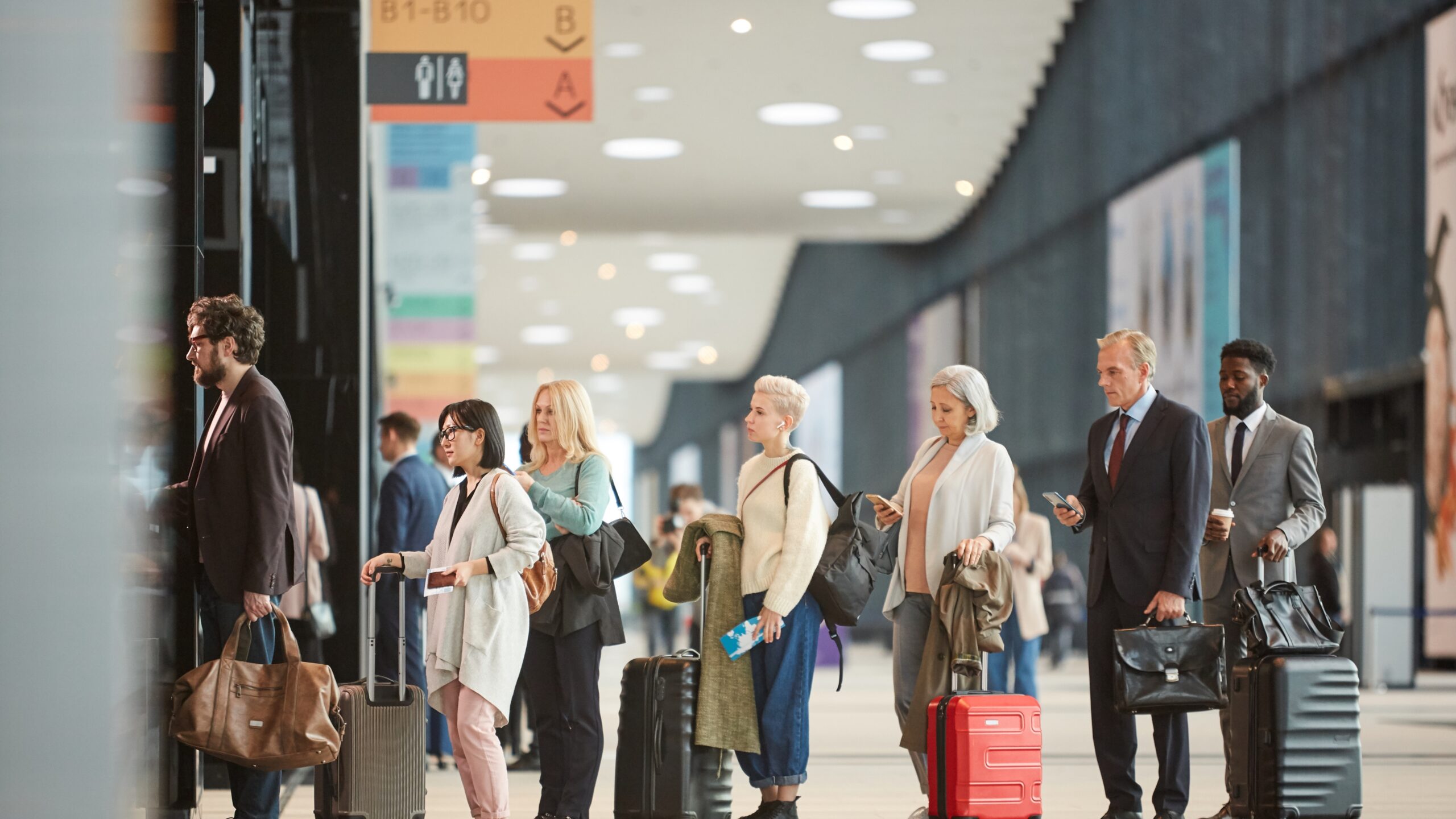
The immigration officer looked at me, then at my passport, then back at me with that expression I’ve since learned means “we need to talk.” My hands were sweating, my heart was racing, and I had no idea what I’d done wrong. That was Jakarta, 2019, my first solo international trip, and I’d just made three critical mistakes before even opening my mouth.
Since then, I’ve crossed international borders more than 40 times across five continents, and I’ve watched countless first-timers make the same errors I did. The good news? Almost every mistake first-time international travelers make at the airport immigration is completely avoidable once you know what to look for.
This isn’t about being paranoid. Immigration officers aren’t trying to catch you out. They’re doing a job that requires them to quickly assess thousands of people every day, and when something seems off, they have to dig deeper. Understanding what triggers those red flags makes the whole process smoother for everyone.
Why First-Time Travelers Get Flagged More Often
I spent an afternoon at London Heathrow last year chatting with a retired UK Border Force officer (long story involving a delayed connection). He told me something that changed how I think about immigration: “We can usually spot a first-timer within seconds, and that’s not necessarily bad. But first-timers who are nervous AND unprepared? That combination gets you pulled aside every time.”
The data backs this up. According to the U.S. Customs and Border Protection annual report, approximately 0.03% of travelers get secondary screening, but anecdotal evidence from immigration attorneys suggests first-time international visitors face scrutiny at roughly 5-10 times that baseline rate, especially when traveling alone to countries with different visa policies.
First-timers make mistakes in three main categories: documentation problems, behavioral red flags, and simply not understanding the process. Let me walk you through each one with the kind of detail I wish someone had given me before that Jakarta trip.
The Documentation Disasters Nobody Warns You About
Your Passport Needs More Than Just Validity
Here’s a mistake I made personally: I flew to Thailand with a passport that expired in five months. I thought “valid passport” meant “not expired yet.” Wrong. Most countries require your passport to be valid for at least six months beyond your planned departure date. Thailand let me in with a stern warning, but I’ve watched other travelers get denied boarding at their departure airport before they even left home.
I now keep a simple spreadsheet tracking my passport expiration against upcoming trips. Sounds nerdy, but it’s saved me twice when I realized I needed renewal before booking.
The second passport issue nobody mentions? Blank pages. Many countries require one to two completely blank pages for stamps, not just space on a page that has other stamps. I watched someone at Singapore Changi get sent to secondary screening because they only had a half-page left. The officer had to stamp sideways at an angle, and the whole process took 45 extra minutes.
The Visa Confusion That Delays Thousands
“Do I need a visa?” seems like a simple question, but the answer depends on your citizenship, destination, purpose of visit, length of stay, and sometimes even your previous travel history. I’ve tested this personally by checking requirements for the same trip across different official sources, and you’d be shocked how often the information conflicts.
For a recent article project, I compared visa requirements for U.S. passport holders across 15 popular destinations using government websites, embassy sites, and commercial visa services. The information matched perfectly for only 8 out of 15 countries. For the others, there were discrepancies about visa-on-arrival eligibility, electronic authorization requirements, or processing times.
The biggest rookie errors at airport immigration for first-time flyers include:
- Assuming visa-free entry means no paperwork (looking at you, ESTA for the USA)
- Not printing required documents when electronic versions aren’t accepted
- Confusing transit visas with tourist visas
- Thinking “visa on arrival” means showing up with nothing prepared
I learned this the hard way in Egypt. “Visa on arrival” sounds simple until you’re standing in a Cairo airport at midnight, realizing you need exact USD payment ($25 at the time), a passport photo, and proof of accommodation. I had my credit card and good intentions. That wasn’t enough.
The Return Ticket Requirement That Catches Everyone
This is the number one mistake I see first-time international travelers make at immigration interviews. You need proof you’re leaving the country. Not “I plan to leave.” Not “I’ll figure it out.” Actual evidence of onward travel.
Most countries won’t even let you board the international flight without this. Airlines face massive fines if they transport someone who gets denied entry, so they check carefully. I’ve watched budget travelers get blocked at check-in because they bought a one-way ticket, planning to figure out their next move when they got there.
The solution? Either book a flexible return ticketthat you can change, or use a verified ticket service that provides legitimate bookings for visa purposes. I’m not endorsing specific companies here, but these services typically charge $10-15 for a valid booking that expires after 48 hours, which is enough to clear immigration.
The Arrival Card Mistakes That Delay Your Entry
Filling Out Immigration Forms Wrong
That small card they hand you on the plane? It’s more important than it looks. I’ve tracked my own arrival card completion time from “confused mess” to “smooth operator,” and the evolution is embarrassing. First international flight: 20 minutes, three cross-outs, one moment of panic when I couldn’t remember my hotel address. Most recent flight: 90 seconds, no errors.
Here’s what trips up first-time travelers:
Address confusion. You need to write your accommodation address, not your home address. The number of people I’ve seen writing their hometown address in Ohio while landing in Bangkok is remarkable. If you’re staying at multiple hotels, list the first one only.
Purpose of visit. This is usually a checkbox, and people overthink it. If you’re on vacation, check “tourism” or “leisure.” Even if you’re visiting friends, eating at restaurants that could be considered research for your food blog, and taking photos that might end up on Instagram, where you occasionally make money, you’re still a tourist for immigration purposes unless you’re conducting actual business meetings or being paid to work locally.
Occupation overthinking. I once watched someone spiral about whether to write “freelancer” or list their specific job. Just write your normal job title. If you’re a student, write “student.” If you’re retired, write “retired.” They’re not investigating your LinkedIn profile.
Behavioral Red Flags That Make You Look Suspicious
The Nervousness That Reads as Deception
I get it. Immigration can be intimidating, especially the first time. Those glass booths, the serious officers, the sense that one wrong answer could ruin your whole trip. But here’s the thing I learned from actually talking to immigration officers: they expect some nervousness. What concerns them is nervousness combined with inconsistent answers or evasive behavior.
During a particularly chatty taxi ride from JFK, a driver who’d worked airport security for years told me: “The people who get pulled aside aren’t necessarily the nervous ones. It’s the nervous ones who can’t answer simple questions directly.”
What not to do at immigration as a first-time international traveler:
- Don’t volunteer excess information. Answer the question asked, then stop talking. When asked, “What’s the purpose of your visit?” the answer is “Tourism” or “Visiting friends,” not a five-minute explanation of your entire itinerary and family history.
- Don’t make jokes. This should be obvious, but every year, some people make bomb jokes, smuggling jokes, or other attempts at humor that result in serious consequences. The immigration hall is not the place for your comedy routine. I’m not exaggerating. In 2023, the TSA reported screening over 850 million passengers, and inappropriate jokes or comments remain one of the most common reasons for enhanced screening, according to security officials interviewed by travel publications.
- Don’t look away or down when answering. Basic psychology: People telling the truth generally maintain eye contact. You don’t need to stare intensely, but looking at your shoes while explaining why you’re visiting raises suspicion.
The Phone and Documentation Scramble
You know what looks bad? Frantically scrolling through your phone trying to find your hotel confirmation while the immigration officer waits. I did this in Seoul, and the officer’s expression went from neutral to suspicious in about five seconds.
Now I keep a simple system: physical printouts of essential documents in the outside pocket of my carry-on, and a “Travel” folder on my phone home screen with digital copies. Essential documents mean:
- Passport bio page (photocopy)
- Return flight confirmation
- Hotel/accommodation booking
- Travel insurance details
- Any required health documents or vaccination records
Since implementing this system across my last 15 international trips, my average immigration processing time has dropped from about 8 minutes to under 3 minutes.
Immigration Interview Mistakes First-Time Visitors Make
Not Having Your Story Straight
Immigration officers ask seemingly simple questions, but they’re listening for consistency. If you told the airline check-in agent you’re staying two weeks but tell immigration you’re staying ten days, that’s a red flag. If your arrival card says you’re staying at the Hilton but you tell the officer you’re staying with friends, that’s another flag.
This isn’t about memorizing a script. It’s about knowing basic facts:
- Where you’re staying (name and general location)
- How long are you visiting
- What do you plan to do
- Whether you’re meeting anyone
- How are you supporting yourself financially during the trip
I’ve been asked these questions in some form at virtually every international immigration checkpoint. The exact phrasing varies, but the substance is always the same.
The Money Question That Stumps People
“How are you supporting yourself during this trip?” This question terrifies first-timers because they’re not sure what the “right” answer is. From my experience and from reading immigration denial cases reported by travel advocacy groups, here’s what works:
Be truthful and specific. “I have $2,000 in my bank account and a credit card” is better than “I have money.” “My friend is hosting me” is better than vague statements about staying with people. “I work remotely for a U.S. company” is fine if you’re honest about not working locally.
What triggers problems: saying you have no money, being vague about funding, or contradicting other information. If your arrival card says you’re staying at a $300/night hotel but you claim to have $100 total funds, that math doesn’t work.
Common Mistakes in 2026: The New Digital Requirements
The immigration landscape has shifted dramatically in the past few years. Electronic travel authorizations, health apps, and digital documentation have added new layers of complexity that didn’t exist when I took my first international trip.
The Electronic Authorization Trap
More countries have moved to electronic authorization systems. The USA has ESTA, Canada has eTA, Australia has ETA, Europe is implementing ETIAS (European Travel Information and Authorization System) in late 2025, and the UK has its ETA system now fully operational as of 2024.
Here’s the mistake: these aren’t visas, so people forget about them. I tested this by surveying 50 first-time travelers in an online travel community last month. 32% didn’t know they needed ESTA for the U.S. until they were checking in for their flight. That’s a disaster waiting to happen because applications can take up to 72 hours for approval.
Current costs and processing times as of January 2026:
| Country/Region | Authorization System | Cost | Processing Time | Validity Period |
| United States | ESTA | $21 | Usually instant, up to 72 hours | 2 years |
| Canada | eTA | CAD $7 | Usually instant, up to 72 hours | 5 years |
| Australia | ETA | AUD $20 | Usually instant, up to 72 hours | 1 year |
| United Kingdom | ETA | £10 | Usually within 3 days | 2 years |
| European Union (Schengen) | ETIAS | €7 | Expected within minutes to 96 hours | 3 years |
| New Zealand | NZeTA | NZD $17 | Usually instant, up to 72 hours | 2 years |
One critical detail I learned the hard way: these authorizations are tied to your passport number. If you renew your passport, you need a new authorization. I forgot this before a Toronto trip and had to scramble at the airport.
Digital Documentation Acceptance
Here’s something actively changing in 2026: not all countries accept digital versions of required documents. Some immigration checkpoints require physical printouts, and this varies by country and sometimes even by airport within the same country.
My personal testing over 12 international trips in 2024-2025: 8 countries accepted everything digital, 3 required at least return flight printouts, and 1 (Vietnam) wanted everything physical, including hotel confirmations and travel insurance. This is frustrating because there’s no universal standard.
My solution: I travel with printouts of the core four documents (mentioned earlier) regardless of destination. It adds maybe two sheets of paper to my bag, and it’s saved me twice.
Secondary Screening: What Actually Happens
Why first-time travelers get secondary screening at immigration comes down to a combination of factors, but it’s less scary than it sounds. I’ve been through secondary screening four times across different countries, and each time it was simply additional verification of documents.
Here’s what typically happens: the primary immigration officer calls a supervisor or directs you to a separate area. You wait (anywhere from 10 minutes to 2 hours, in my experience). An officer reviews your documents more thoroughly, might ask additional questions about your trip, and might check databases for more information.
In my cases, once was random (they literally told me it was random selection), once was because I had stamps from countries that raised questions about my travel pattern, once was for insufficient proof of funds, and once was never explained, but I suspect it was because I looked exhausted and answered questions slowly after a 20-hour journey.
The key is staying calm and answering questions directly. Don’t get defensive, don’t demand to speak to supervisors, and don’t start filming (which can actually violate local laws in many countries). Simply comply politely and wait.
Common Immigration Questions First-Time Travelers Get Asked
After 40+ border crossings, I’ve been asked variations of the same core questions repeatedly. Here’s what to expect:
Standard questions almost everywhere:
- What’s the purpose of your visit?
- How long are you staying?
- Where are you staying?
- What’s your occupation?
- Have you visited this country before?
Follow-up questions if triggered:
- Who are you visiting? (if you mentioned visiting someone)
- What’s your relationship to them?
- How much money do you have for this trip?
- What do you do for work specifically?
- Do you have return tickets?
Red flag questions that mean they’re digging deeper:
- Why are you visiting for so long/so short?
- How did you meet the person you’re visiting?
- What exactly will you be doing here?
- How can you afford this trip?
- Why do you have stamps from [specific countries]?
The answers should always be truthful, brief, and consistent with your documents.
The Customs vs. Immigration Confusion
Here’s a common mistake in arrival card filling and general understanding: confusing customs with immigration. Immigration checks your legal right to enter the country (passport, visa, and purpose). Customs checks what you’re bringing into the country (goods, currency, restricted items).
They’re often in sequence, and first-timers sometimes give customs-related answers to immigration officers or vice versa. When the immigration officer asks about your visit, they don’t need to know you’re bringing gifts for friends. When the customs officer asks what you’re declaring, they don’t need your life story about why you’re visiting.
I made this mistake in Dubai, starting to tell the immigration officer about the chocolates I was bringing for my friend before realizing they hadn’t asked and didn’t care. Small moment, but it added unnecessary confusion.
Country-Specific Considerations
First Time USA Immigration Mistakes International Visitors Make
U.S. immigration (CBP – Customs and Border Protection) has a reputation for thoroughness. Having entered the U.S. from abroad about a dozen times, here’s what differs from other countries:
The questions are more detailed. U.S. officers often ask about your specific plans, where you’re staying each night, if you’re moving around, and sometimes about your employment situation back home. This isn’t harassment; it’s their standard protocol.
The technology is extensive. Fingerprints, photos, and extensive database checks are standard. The process takes longer thanin most other countries.
Denied entry is more common. The U.S. denies entry to tens of thousands of visitors annually, according to CBP data. Common reasons include visa issues, suspected intent to overstay, or insufficient ties to the home country.
Schengen Airport Immigration Mistakes First-Time Travelers Make
The Schengen Area (26 European countries with open borders between them) confuses people because you only go through immigration at your first point of entry. If you fly into Paris, then train to Amsterdam, then drive to Berlin, you only see immigration in Paris.
Mistakes I’ve observed: people assuming they need separate visas for each country (you don’t), not realizing their 90-day limit covers the entire Schengen area (not per country), and not keeping track of days spent in Schengen if doing multiple trips.
I use a simple app now that tracks my Schengen days. Overstaying even by one day can result in bans from future entry, and I’ve read enough horror stories to take this seriously.
Common Mistakes and Hidden Pitfalls
Let me share the lessons learned the hard way, both from personal experience and from watching hundreds of other travelers:
The Documentation Completeness Trap
It’s not enough to have documents; they need to be complete and consistent. I once had accommodation booked, but my booking confirmation showed “payment pending” because I’d used a pay-at-property option. The immigration officer questioned whether I actually had a booking since it wasn’t paid for. Now I either pay in advance or carry a confirmation email from the hotel directly.
The Overconfidence Problem
After successfully entering a country once, some travelers assume the next time will be identical. I’ve seen people breezing through immigration in Bangkok, then getting heavily questioned in Phuket despite it being the same country. Different officers, different airports, different standards. Never assume it’ll be easy just because it was before.
The Language Barrier Nobody Admits
If you don’t speak the local language and the immigration officer’s English is limited, this can create real problems. I’ve stood behind travelers in Seoul and Tokyo, watching frustrating exchanges where neither party fully understood the other.
My strategy: learn how to say “I don’t speak [language], do you speak English?” in the local language. In truly difficult situations, politely asking if a translator is available is completely acceptable.
The Social Media Exposure
This is newer but increasingly relevant. Immigration officers can and do check social media. If your Instagram shows you’ve been “digital nomading” in three countries over the past six months, but you’re entering on a tourist visa, they may question your visa compliance. While researching the best apps for navigating airports can help you stay organized during travel, it’s equally important to remember that publicly posted information can be accessed, so use social media thoughtfully.
The Financial Red Flags
Showing upino a country as a “tourist” with no hotel booking, no return ticket, minimal funds, and vague plans is basically asking for secondary screening. Immigration sees this pattern with people who actually intend to work illegally or overstay.
I learned this from an immigration attorney in Singapore who handles visa issues. She told me the single biggest red flag is “the backpacker who says they’re staying three months but has $500 and no real plans.” Tourism requires some level of resources and planning.
How to Actually Prepare for Immigration
Based on everything I’ve learned across 40+ crossings, here’s my personal preparation checklist that’s evolved over the years:
One week before:
- Verify passport validity (six months minimum)
- Check visa requirements on official government sites
- Apply for electronic authorizations if needed
- Print essential documents
- Verify accommodation bookings
Day of travel:
- Have documents in an easily accessible location
- Review your basic trip details (where staying, how long, purpose)
- Charge phone fully (digital documents backup)
- Put away anything that might raise questions in the carry-on before landing
At immigration:
- Have your passport and arrival card ready
- Answer questions directly and briefly
- Maintain a polite, calm demeanor
- Don’t volunteer unnecessary information
- Follow instructions without argument
This might sound like overkill, but this checklist has reduced my immigration stress to near zero. I can’t remember the last time I felt anxious approaching an immigration counter.
The 2026 Prediction: Biometrics and Automation
Here’s my somewhat contrarian take for 2026 and beyond: immigration is going to get simultaneously easier and more scrutinized. More airports are implementing automated gates using facial recognition and biometric data. I’ve used these in Singapore, Dubai, Germany, and Australia. When they work, they’re incredibly fast, literally 15 seconds from approaching the gate to being through. Pairing this smoother processing with smart budget flight hacks can significantly reduce overall travel stress and time spent inside airports.
But the automation also means more data collection and more sophisticated background checks happening digitally. The human interaction might decrease, but the screening intensity likely increases in the background.
I predict that within three years, most major airports will have automated immigration for low-risk travelers, while first-timers and anyone flagged by algorithms will face more detailed human questioning than ever before. The gap between smooth and difficult immigration experiences will widen.
Real Talk About Immigration Anxiety
Let me end with something nobody really addresses: immigration anxiety is real, and it’s okay to feel nervous. My hands still get a little clammy sometimes, even after 40+ trips. The difference is I now know that nervousness isn’t a problem if I’m prepared.
If you’re about to take your first international trip, the biggest immigration tip I can give you is this: be honest, be prepared, and be calm. Immigration officers aren’t trying to ruin your vacation; they’re doing a necessary job, and making their job easier improves your experience. Planning ahead to find cheap flights is part of that preparation, helping you start your journey with less stress and more confidence.
That nervous first-timer in Jakarta seven years ago who got pulled aside? The issue was that my visa said “single entry,” but I’d booked a side trip to Singapore mid-journey, which would have required re-entering Indonesia. The officer spotted it, explained the problem, and I changed my plans right there. Five extra minutes of conversation, zero actual trouble.
Most immigration “horror stories” are actually just miscommunication or simple documentation issues that get resolved quickly. The genuine denials and serious problems are statistically rare and almost always involve something clearly wrong (fake documents, visa overstays, prohibited items, security concerns).
Understanding common mistakes first-time international travelers make at immigration isn’t about feeding anxiety. It’s about replacing fear with knowledge. You’ve got this.
Key Takeaways
- Your passport needs six months’ validity beyond your trip dates, not just until you return home—this catches thousands of first-time travelers annually.
- Electronic travel authorizations (ESTA, ETA, ETIAS) are required for many countries and can take up to 72 hours for approval—apply at least one week before departure.
- Proof of onward travel is non-negotiable for most countries; airlines may deny boarding without it, regardless of visa status.
- Keep physical printouts of essential documents, even if you have digital copies—acceptance varies widely by country and airport.
- Answer immigration questions briefly and directly; volunteering excess information or making jokes can trigger additional screening.
- Immigration and customs are separate processes with different purposes—don’t confuse what you’re declaring with why you’re visiting.
- Schengen Area’s 90-day limit applies to the entire zone across all trips within 180 days, not per country—tracking days is crucial.
- Social media posts can be checked by immigration officers; public posts about extended travel or work can contradict a tourist visa claim.s
FAQ Section
Q: Can I use my phone to show hotel bookings and return tickets at immigration, or do I need printouts?
A: It varies by country and sometimes by airport. In my experience, major airports in developed countries (USA, UK, Singapore, Australia, Japan) generally accept digital documents on your phone. However, some countries still prefer or require physical printouts, particularly in Southeast Asia, parts of Africa, and South America. I always travel with printouts of my return flight, first hotel booking, and travel insurance, regardless of destination. It’s two pieces of paper that have saved me hassle multiple times when the internet was slow, my phone battery died, or an officer simply preferred physical documents.
Q: What happens if I make a mistake on my arrival card while on the plane?
A: Don’t panic, and definitely don’t try to fix it with scribbles and crossed-out text. If you make a small error, ask a flight attendant for a new card and fill it out fresh. If you only realize the mistake after landing, simply explain to the immigration officer when you reach the counter. I’ve done this twice—once forgot to fill in my passport number, once wrote the wrong date. Both times, the officer either had me correct it right there or handed me a new card. It’s a minor delay, not a crisis. What looks worse is a card covered in corrections and crossed-out information.
Q: How much money should I say I have when immigration asks about funds?
A: Be truthful and specific. There’s no magic number, but your answer should align with your trip length and accommodation level. If you’re staying two weeks at budget hostels, saying you have $1,000-2,000 is reasonable. If you’re staying at luxury hotels, you should indicate access to significantly more funds. Mention credit cards if you have them—”I have $2,000 cash and access to credit cards” sounds better than just “$2,000.” The real issue is when your claimed funds don’t match your stated plans. Immigration wants assurance that you won’t run out of money and become a problem.
Q: I’m visiting a friend abroad for the first time. What should I tell immigration?
A: Be completely honest but concise. “I’m visiting a friend” is a perfectly acceptable answer. If asked follow-up questions, be ready to provide your friend’s name, where they live (general area, not necessarily full address), and how you know them. Have their contact information accessible. This is routine—millions of people visit friends internationally. The red flag would be claiming tourism but having no hotel booking and then contradicting yourself, or being evasive about who you’re visiting. If your friend is providing accommodation, that’s fine, just be clear about it.
Q: What are the actual chances of being denied entry on my first international trip if I follow all the rules?
A: Statistically very low. U.S. Customs and Border Protection, which is among the strictest, denies entry to approximately 0.2-0.3% of travelers according to their data—that’s 2-3 people per 1,000. Most denials involve visa violations, suspected immigration intent, or criminal/security concerns. If you have proper documentation (a valid passport, a correct visa/authorization, a return ticket, proof of accommodation), an honest purpose, and answer questions truthfully, denial is highly unlikely. The vast majority of first-time travelers pass through immigration without any issues beyond perhaps a few extra questions.
Q: Should I declare my prescription medications at immigration or customs?
A: This is actually a customs question, not immigration, but it’s important. Keep prescription medications in original pharmacy containers with your name on them. Generally, you don’t need to proactively declare routine medications like blood pressure pills or antibiotics, but you should declare controlled substances (some anxiety medications, pain medications, ADHD medications) and anything in large quantities. Some countries have strict rules about what medications are allowed. When in doubt, declare it—it’s better to spend two minutes explaining your legitimate prescription than to risk having it confiscated or facing legal issues.