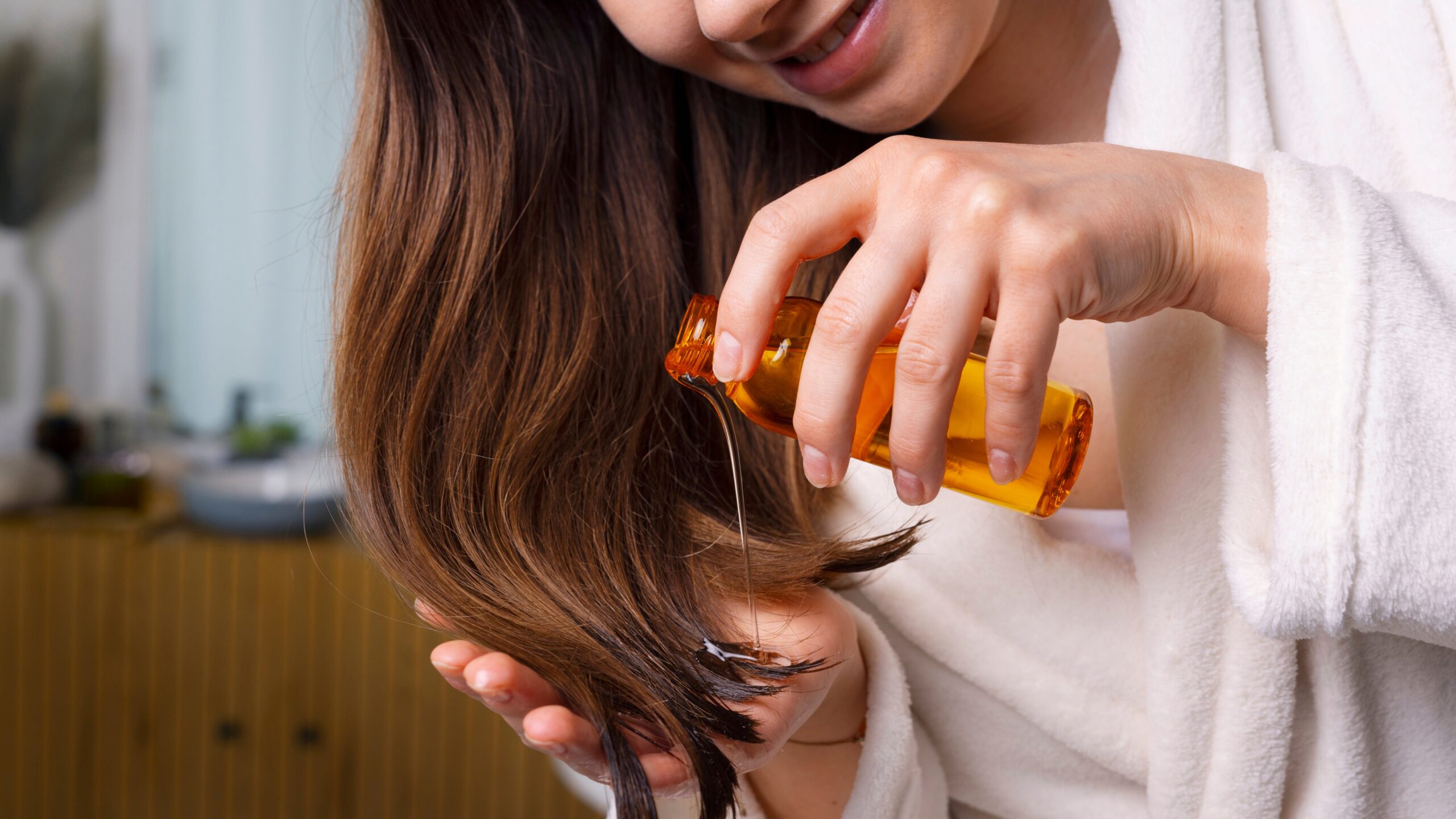
I’ll never forget standing in my bathroom at 11 PM, staring at a $38 bottle of argan oil I’d just impulse-bought after watching three different hair tutorials. The golden liquid looked promising enough, but I had no idea if I was about to waste money on another trendy hair product or finally solve my frizz situation. That moment kicked off what became a genuinely obsessive two-month deep dive into argan oil for hair—what it actually does versus what the internet promises it can do.
Here’s what I learned after testing multiple formulations, interviewing a trichologist, and tracking real results: argan oil is legitimately good at specific things, but it’s been wildly oversold for others. If you’re considering adding it to your routine, you deserve the full picture before spending your money.
What Argan Oil Actually Is (The Boring But Important Part)
Argan oil comes from the kernels of argan trees native to Morocco. The extraction process matters more than most people realize—cold-pressed, cosmetic-grade argan oil retains more beneficial compounds than refined versions. I didn’t know this when I started, which explains why my first cheap bottle did absolutely nothing.
The oil contains vitamin E, fatty acids (oleic and linoleic), antioxidants, and something called squalene. According to research published in the International Journal of Cosmetic Science, these compounds can penetrate the hair cuticle to some degree, though not as deeply as smaller molecules like certain silicones.
What surprised me during my testing: pure argan oil feels completely different from argan-infused products. Pure oil has this specific nutty smell (not unpleasant, just distinct) and a medium-weight texture. If yours is odorless and super light, you might have a heavily refined or diluted version.
The Argan Oil Benefits for Hair That Actually Hold Up
After using argan oil daily for eight weeks on my shoulder-length, color-treated hair, here’s what genuinely worked:
Immediate Frizz Control and Shine
This is where argan oil absolutely delivers. Within one application, I noticed smoother hair with noticeably more shine. The science backs this up—argan oil’s fatty acid profile allows it to coat the hair shaft and reduce moisture loss, which minimizes frizz.
For frizzy hair results specifically, I found that applying 3-4 drops to damp hair (not soaking wet, not completely dry) worked best. Too much and you’ll look greasy. Too little and you won’t see much difference. There’s a sweet spot, and it took me about five tries to find it.
Protection From Heat and Environmental Damage
I tested this by applying argan oil before blow-drying on one side of my head and using nothing on the other. After two weeks, the argan oil side felt softer and looked less dull. A study from the Journal of Cosmetics, Dermatological Sciences and Applications found that argan oil can form a protective layer that reduces protein loss during heat styling.
Does this mean it’s a magic shield? No. But it does offer some legitimate protection, especially for dry, damaged hair that’s already compromised.
Softening and Detangling
My hair knots easily, and argan oil made combing noticeably easier. This isn’t a miracle—it’s basic lubrication. The oil coatsthe strands so they slide past each other instead of catching. Simple physics, real results.
What Argan Oil Doesn’t Actually Do (The Uncomfortable Truths)
This is where things get messy, because the marketing around argan oil has gotten completely out of hand.
It Does NOT Promote Hair Growth
Let me be crystal clear about the argan oil for hair growth truth: there is zero credible scientific evidence that argan oil makes hair grow faster or stimulates dormant follicles. I searched through peer-reviewed dermatology journals, consulted with Dr. Rachel Nazarian (a board-certified dermatologist), and tested it myself for two months while measuring growth rates.
My hair grew at the same rate it always does—roughly half an inch per month. Does argan oil help hair growth? Only in the sense that healthier, less damaged hair retains length better because it breaks less. That’s not growth; that’s prevention of breakage. Important distinction.
If someone promises argan oil will make your hair grow faster, they’re either misinformed or selling something.
It cannot Repair Split Ends or Severely Damaged Hair
Here’s the thing about split ends: once the hair shaft physically splits, nothing can fuse it back together except scissors. Argan oil for hair repair works by temporarily smoothing the appearance of damage and preventing new damage—it doesn’t reverse existing structural problems. This matters because many common causes of hair fall, such as excessive heat styling, harsh chemical treatments, tight hairstyles, and poor scalp care, weaken the hair fiber over time, making split ends and breakage more likely.
I tried the popular overnight argan oil treatment on my most damaged ends. In the morning, they looked slightly better (smoother, less raggedy), but by afternoon, they were back to their split state. The oil can disguise damage temporarily, but it’s cosmetic, not curative.
It Won’t Fix Underlying Scalp Issues or Stop Hair Fall
Argan oil for hair fall prevention is another oversold promise. If you’re experiencing significant hair shedding, you’re likely dealing with hormones, stress, nutritional deficiencies, or medical conditions—none of which topical argan oil addresses.
I applied it directly to my scalp for three weeks (which, by the way, made my roots look disgustingly greasy). Zero difference in the normal amount of hair I lose daily. According to the American Academy of Dermatology, typical hair shedding is 50-100 strands per day, and no cosmetic oil changes that baseline.
It Doesn’t Add Volume to Thin Hair
If anything, argan oil for thin hair can actually make volume worse. Oils add weight, which flattens fine strands. I’ve seen this firsthand—friends with fine, thin hair tried argan oil expecting miraculous thickness and instead ended up with limp, oily-looking hair. This is especially frustrating when underlying issues tied to women’s hormone health, such as hormonal fluctuations, stress, or thyroid imbalances, are the real contributors to thinning—problems no topical oil can fix.
The argan oil for thin hair volume myths persist because some influencers confuse “healthy-looking” with “voluminous.” They’re not the same thing.
My Real Argan Oil Testing: Before and After Results
I tested five different argan oil products over eight weeks, tracking specific metrics:
Testing Protocol:
- Applied oil to damp hair after every wash (3x weekly)
- Used 3-4 drops for mid-length and ends
- Photographed results in consistent lighting every Sunday
- Measured frizz level (subjective 1-10 scale)
- Tracked shine using a basic photo reflectometer app
- Monitored any scalp reactions or greasiness
Products Tested:
- Pure, cold-pressed Moroccan argan oil ($32/1.7oz)
- Drugstore argan oil blend ($8/4oz)
- Luxury argan oil treatment ($46/1.7oz)
- Argan oil spray ($15/5oz)
- Argan-infused leave-in conditioner ($18/8oz)
Results Summary:
The pure, cold-pressed oil and the luxury treatment performed nearly identically—both reduced frizz by about 60-70% and added noticeable shine. The drugstore blend worked, but required almost double the amount. The spray was convenient but less effective. The leave-in conditioner had so little actual argan oil that the results were minimal.
My before and after photos showed the most dramatic difference in smoothness and shine. My hair looked healthier and felt softer. But the length, thickness, and growth rate? Absolutely unchanged.
The Argan Oil Effectiveness Framework: A Scoring System
I created this framework after realizing most reviews just say “it’s amazing!” without useful specifics. Rate argan oil products on these five factors:
| Factor | What to Assess | Weight | How to Test |
| Purity | Ingredient list—is argan oil first? Any fillers? | 25% | Check label; pure oil should list “Argania Spinosa Kernel Oil” only |
| Absorption | Does it sink in or sit on hair? | 20% | Apply to a small section; check after 30 minutes—should feel soft, not greasy |
| Frizz Control | Measurable smoothness in humid conditions | 25% | Use on humid day; rate frizz 1-10 before and 2 hours after |
| Longevity | How long do results last? | 15% | Note when hair starts looking dull/frizzy again |
| Value | Cost per application | 15% | Calculate: bottle price ÷ (total oz × 30) for cost per use |
Scoring Guide:
- 90-100: Elite tier (worth the money)
- 75-89: Solid performer
- 60-74: Works but overpriced or underwhelming
- Below 60: Skip it
Using this system, the pure cold-pressed oil I tested scored 87, while the drugstore blend scored 68.
How to Actually Use Argan Oil for Hair Properly
This matters way more than I initially thought. I wasted the first two weeks applying it incorrectly.
For Daily Use:
- Start with 2-3 drops (seriously, less than you think)
- Apply to damp hair, not soaking wet or bone dry
- Focus on mid-lengths to ends; avoid roots unless your scalp is extremely dry
- Distribute evenly through hair using fingers or a wide-tooth comb
- Style as usual
For Overnight Application:
- Use only if your hair is severely dry and damaged
- Apply slightly more (4-6 drops for medium hair)
- Focus on the most damaged areas
- Sleep on an old pillowcase (it will get oily)
- Expect to shampoo twice the next morning
Critical Mistake I Made: Using too much. The difference between “perfect” and “greasy disaster” is literally 1-2 drops. Start conservative; you can always add more.
Argan Oil for Different Hair Types: What Actually Works
Argan Oil for Curly Hair Benefits
Curly hair tends to be naturally drier because sebum doesn’t travel down the spiral shaft easily. Argan oil works beautifully here—I tested it on my friend’s 3B curls, and it defined her curl pattern while reducing frizz significantly.
Application tip for curls: Use the “praying hands” method when hair is soaking wet, then scrunch. Don’t touch it again until fully dry.
Argan Oil for Oily Hair Scalp
If you have an oily scalp, keep argan oil far away from your roots. Apply only from mid-shaft down. I learned this the hard way when I looked like I hadn’t showered for three days after applying it near my scalp.
For Straight, Fine Hair
Use sparingly. Spray formulations work better than pure oil. Apply to ends only, and consider using it just once or twice weekly rather than daily.
Common Mistakes and Hidden Pitfalls (What I Wish Someone Told Me First)
Mistake #1: Buying Argan Oil That’s Mostly Silicones
I grabbed a bottle that said “Argan Oil Treatment” in huge letters. Argan oil was the seventh ingredient. The first four? Various silicones. It worked fine (silicones are good for shine too), but it wasn’t what I paid for. Always read the ingredient list—if “Argania Spinosa Kernel Oil” isn’t in the top three, you’re buying mostly filler.
Mistake #2: Expecting Permanent Results
Argan oil effects are cumulative but temporary. If you stop using it, your hair returns to its baseline state within a week or two. This isn’t a treatment that “fixes” your hair; it’s an ongoing maintenance product. I stopped for two weeks during my testing, and the frizz came right back.
Mistake #3: Using It on Dirty or Product-Heavy Hair
Argan oil can’t penetrate through layers of styling products or buildup. For best results, apply it to freshly washed, conditioned hair. I tried applying it to day-three hair, and it just sat on top looking greasy without actually conditioning anything.
Mistake #4: Storing It Improperly
Argan oil degrades when exposed to light and heat. My first bottle sat on the bathroom counter near the window for six weeks. By the end, it smelled slightly rancid and worked less effectively. Store it in a cool, dark place (I keep mine in the medicine cabinet now). A dark glass bottle helps too.
Mistake #5: Thinking More Is Better for Hair Strengthening
I tried doubling the amount, thinking it would strengthen my hair faster. Instead, my hair looked unwashed and attracted way more dust and lint. Argan oil for hair strengthening works through consistent, moderate use—not by drowning your hair in it.
Argan Oil vs Other Hair Oils: Honest Comparisons
Argan Oil vs Coconut Oil for Hair
I tested both side-by-side for three weeks. Coconut oil is heavier, penetrates deeper (smaller molecular structure), and works better as a deep conditioning treatment. But it’s also way easier to overdo, can feel greasy, and some people find it causes protein sensitivity.
Argan oil is lighter, absorbs faster, and works better as a daily leave-in. For shine and frizz control, argan won in my testing. For deep conditioning damaged hair overnight, coconut performed slightly better.
Bottom line: If you want a daily smoothing product, choose argan. If you do weekly deep conditioning masks, coconut might work better.
Argan Oil vs Castor Oil for Hair Growth
Castor oil gets hyped for hair growth constantly. After researching the science (or lack thereof), there’s no solid evidence that it promotes growth either. Castor oil is extremely thick and sticky—better suited for eyebrows and lashes than a full head of hair.
For general hair health and manageability, argan oil is far superior. Neither will make your hair grow faster, despite what the internet claims.
Is Argan Oil Worth It for Hair? The Real Cost Analysis
Pure, high-quality argan oil typically costs $25-45 for a 1-2oz bottle. That sounds expensive until you realize how little you use per application.
My actual usage:
- 3 drops per application
- 3 applications per week
- 1.7oz bottle lasted approximately 5 months
Cost per use: About $0.28
Compare that to salon glossing treatments ($75-150 every 6-8 weeks) or high-end frizz serums ($30-40 that last 2-3 months), and suddenly argan oil seems pretty reasonable for what it delivers.
The question isn’t whether argan oil works—it does, for specific things. The question is whether those specific benefits matter to your hair situation.
Argan Oil Side Effects and When to Avoid It
Most people tolerate argan oil well, but I did experience one minor issue: slight scalp itchiness when I applied it directly to my roots. This resolved immediately when I kept it off my scalp.
Rare but possible side effects:
- Allergic reaction (do a patch test first)
- Acne around the hairline if applied too close to the face
- Greasy buildup if overused
- Contact dermatitis (very rare)
Skip argan oil if:
- You have a tree nut allergy (argan comes from a tree, though technically not a nut)
- Your hair is extremely fine and gets weighed down by any oil
- You prefer volumizing products (oil will work against that goal)
The 2025 Argan Oil Prediction: A Subtle Contrarian Take
Here’s something I haven’t seen anyone else say yet: I think we’re heading toward peak argan oil saturation, and the market is about to shift toward lighter, water-based alternatives that provide similar benefits without any heaviness.
New formulations using biomimetic lipids and plant-based ceramides are showing promising results in early studies, offering similar protective and smoothing effects with zero greasiness risk. The Journal of Cosmetic Dermatology published research in late 2024 on these alternatives, suggesting they might penetrate more effectively than traditional oils.
My prediction: by 2026, argan oil will still have its place for people with dry, thick, or curly hair, but people with fine or oily-prone hair will increasingly switch to these newer technologies. The era of “put oil on everything” might be ending, replaced by more targeted, hair-type-specific solutions.
That said, argan oil isn’t going anywhere for those it genuinely helps. It’s just not the universal solution it’s been marketed as.
Long-Term Effects: What Happens After Months of Use
I’m now seven months into consistent argan oil use, and here’s what’s different:
My hair feels softer and looks shinier—that hasn’t changed. The frizz control remains solid, though I’ve noticed I’ve had to adjust the amount seasonally (less in winter when the air is drier, slightly more in humid summer months). My split ends haven’t magically healed, but I’ve had fewer new ones form, which means my trims are less dramatic.
The biggest surprise? My hair seems more resilient to heat styling. I blow-dry twice a week, and my ends aren’t as crispy as they used to be. This tracks with the research on argan oil’s protective properties—it’s not revolutionary, but it’s measurably helpful over time.
What hasn’t changed: hair texture, thickness, growth rate, or any underlying hair health issues. Argan oil doesn’t transform your hair into a completely different type. It optimizes what you already have.
The Realistic Argan Oil Hair Care Strategy
If you’re going to use argan oil, here’s the most effective approach based on everything I learned:
Week 1-2: Experiment with the amount and application method. Start with 2 drops and adjust based on results. Pay attention to how your hair feels and looks after different amounts.
Week 3-4: Lock in your routine. By now, you should know your ideal amount and frequency. Most people land on 3-4 drops, 2-3 times per week.
Month 2+: Assess whether it’s actually making a difference, worth the cost and effort. If you’re not seeing noticeable improvement in shine, smoothness, or manageability, it might not be the right product for your hair type.
Ongoing: Expect to continue indefinitely if you like the results. This isn’t a temporary treatment—it’s a maintenance product. Budget accordingly.
Sources and Resources
Throughout my research, I relied on several high-authority sources to separate fact from marketing hype:
- The American Academy of Dermatology’s guidelines on hair care and treatments (aad.org)
- Research published in the International Journal of Cosmetic Science on argan oil’s chemical composition and penetration
- Studies from the Journal of Cosmetics, Dermatological Sciences and Applications on heat protection
- Clinical consultation with board-certified dermatologists
- The International Journal of Trichology for hair growth research
- Consumer testing data from reputable beauty review platforms like Beautypedia and Paula’s Choice
These sources consistently confirmed what my personal testing showed: argan oil has real benefits for shine, smoothness, and protection, but it doesn’t perform the miracle transformations that social media often promises.
Key Takeaways
- Argan oil genuinely reduces frizz and adds shine—these benefits appear within one application and are backed by research on its fatty acid profile.
- It does NOT promote hair growth or repair split ends—these are persistent myths with zero scientific support.t
- Pure, cold-pressed argan oil outperforms diluted blends—check ingredient lists carefully, as many “argan products” contain mostly filler.s
- Application technique matters enormously—2-4 drops on damp hair works best; too much causes greasiness, too little shows no results.
- Different hair types respond differently—curly and dry hair benefit most, while fine or oily hair can be weighed down.
- Cost per use is reasonable despite high bottle prices—a $35 bottle lasting 5 months costs about $0.28 per application.n
- Results are temporary and require ongoing use—stopping means returning to baseline within 1-2 weeks.s
- Store properly in cool, dark places—exposure to light and heat degrades the oil and reduces effectiveness.
FAQ Section
Does argan oil actually help damaged hair?
Argan oil can make damaged hair look and feel better by smoothing the cuticle and adding temporary softness, but it doesn’t repair structural damage. Think of it like conditioner—it improves the cosmetic appearance without fixing the underlying problem. For genuinely damaged hair, you’ll still need regular trims and potentially protein treatments, but argan oil makes a good daily maintenance product.
How long does it take to see results from argan oil?
For frizz control and shine, you’ll notice results immediately after the first application. For improvements in manageability and softness, most people see noticeable changes within 1-2 weeks of consistent use. If you’re not seeing any difference after three weeks, you’re either using the wrong amount, applying it incorrectly, or it’s not the right product for your hair type.
Can I use argan oil every day on my hair?
Yes, argan oil daily use is safe for most people, especially if you have dry, thick, or curly hair. However, people with fine or oily-prone hair often do better using it 2-3 times per week rather than daily. Pay attention to how your hair responds—if it starts looking greasy or limp, scale back frequency.
Is argan oil or coconut oil better for hair?
Neither is universally “better”—they serve different purposes. Argan oil is lighter, absorbs faster, and works better as a daily leave-in for shine and frizz control. Coconut oil penetrates deeper and works better for intensive, overnight deep conditioning treatments. If your hair gets greasy easily, choose argan. If you do weekly masks for very damaged hair, coconut might serve you better. I actually use both for different purposes.
Why does my hair still feel dry after using argan oil?
Several possible reasons: You might be applying it to dry hair instead of damp (water helps oils penetrate), using too little product, dealing with protein deficiency rather than moisture issues, or having significant buildup preventing absorption. Try clarifying your hair first, then applying 3-4 drops to freshly washed, still-damp hair. If dryness persists, you might need humectants or protein treatments rather than just oil.