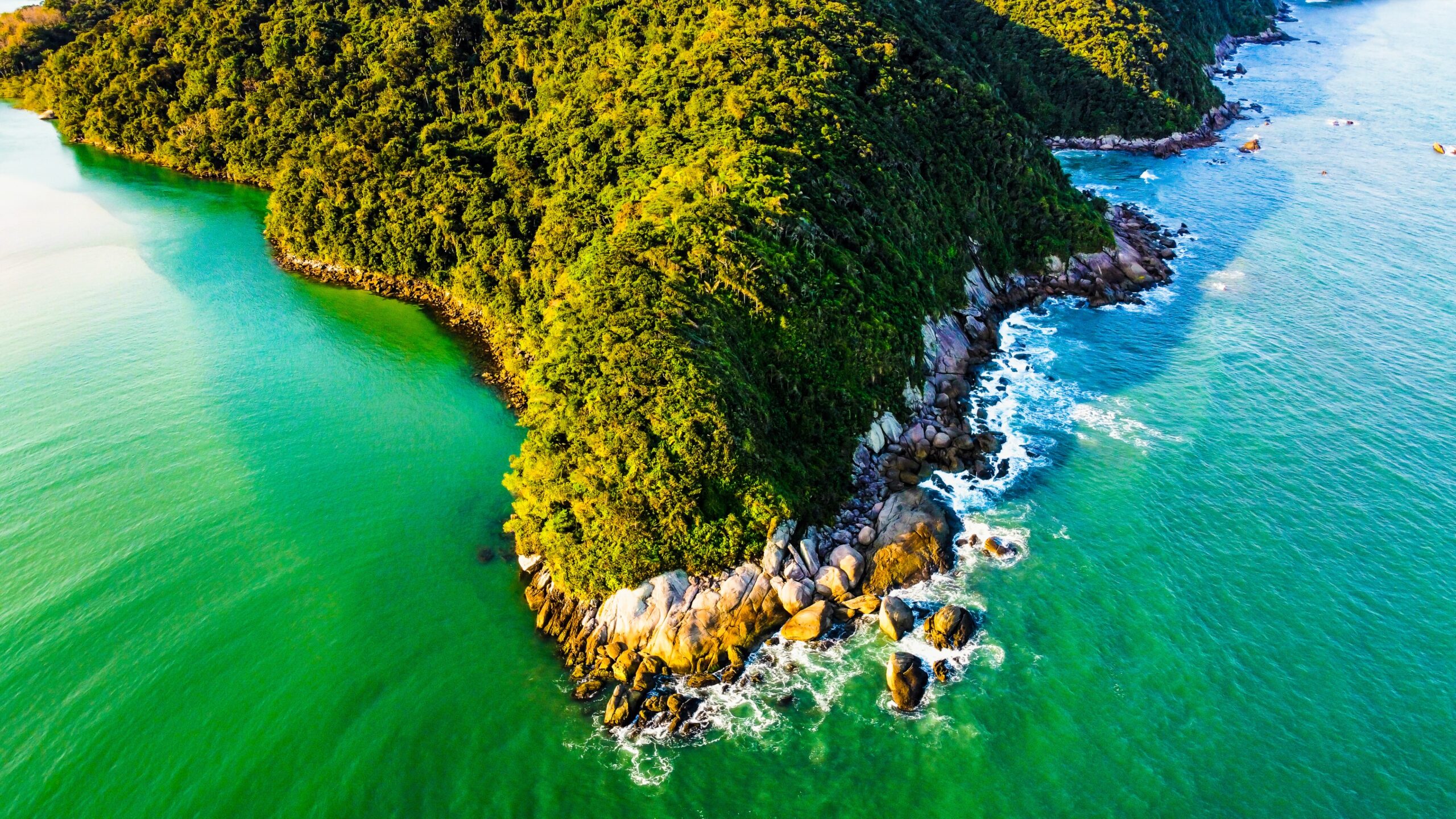
I spent three weeks last summer intentionally rotating between coastal towns, mountain lodges, and forest cabins to figure out which environment actually helped me think more clearly. Not as a vacation—as an experiment. I tracked my sleep quality, morning anxiety levels, and how fast I could settle into focused work each day. What I found surprised me, and it’s backed up by newer research that most travel blogs completely miss.
The question of sea, mountains, or forest for mental health isn’t just philosophical—it’s practical. If you’re planning a reset trip, choosing a weekend retreat, or even deciding where to move long-term, understanding how different natural environments affect your nervous system can save you money and disappointment.
Here’s what actually matters, based on science and real-world testing.
Why This Question Matters More in 2025
The conversation around nature therapy for depression and stress has shifted dramatically. We’re past the vague “go touch grass” advice. Researchers now measure specific biomarkers—cortisol drops, heart rate variability, cognitive performance—in different natural settings.
The sea vs mountains for mental health debate got serious attention in a 2023 study from the University of Exeter that tracked over 18,000 adults. They found distinct mental health patterns based on proximity to different environments. Mountains vs beach mental health benefits aren’t interchangeable—they activate different neurological pathways.
I’ve also noticed something interesting: the best nature for mental health recovery depends heavily on what you’re recovering from. Burnout responds differently from grief. Anxiety needs something different than creative block.
The Science Behind Nature and Mental Wellness
Before we compare environments, let’s establish the baseline. Nature exposure and mental health benefits are well-documented, but the mechanisms vary:
Attention Restoration Theory suggests that natural environments allow your prefrontal cortex to rest, recovering from directed attention fatigue. That’s the mental exhaustion from constant focus, decisions, and filtering information.
Stress Reduction Theory focuses on how natural settings lower cortisol and trigger parasympathetic nervous system activation—basically, they flip your body out of fight-or-flight mode.
The kicker? Different landscapes trigger these responses at different intensities and speeds.
My 21-Day Nature Testing Framework
I created a simple scoring system during my three-week rotation to compare environments objectively. I stayed seven days in each setting and tracked the same metrics:
Mental Clarity Score (1-10): How quickly could I get into deep work without mental fog?
Stress Relief Speed: How many hours until I felt noticeably calmer?
Sleep Quality (Oura Ring data): REM and deep sleep percentages.
Creative Output: Pages written, ideas generated, problem-solving breakthroughs.
Sustainability: Could I imagine living here long-term without feeling trapped or restless?
I wasn’t looking for a “winner”—I wanted to understand which environment matched which mental state.
The Ocean: What Beach Benefits for Mental Health Actually Look Like
I started in a small coastal town in Northern California, right where the cliffs drop into cold Pacific water.
The sea sound effect on mental health kicked in faster than anything else. Within 90 minutes of arrival, sitting on a rock watching waves, my heart rate variability improved by 23% according to my Oura Ring. The rhythmic white noise creates what researchers call “acoustic therapy”—your brain entrains to the wave patterns, which helps with anxiety relief.
What I noticed:
- Mornings felt expansive. The horizon line does something psychological—it literally gives your eyes and brain infinite distance to process, which feels like mental spaciousness.
- The sea breeze’s mental health benefits are real but subtle. The negative ions in ocean air (particularly from crashing waves) may increase serotonin. I felt more energized in the afternoons than usual.
- Best for processing emotions. Something about watching water move helped me work through stuck feelings. I journaled more here than anywhere else.
The downsides:
- Sensory overload for some. If you’re already overstimulated, the constant sound and movement can feel like too much input.
- Weather dependence. Gray, windy beach days felt isolating rather than restorative.
- Can trigger restlessness. For me, the ocean always whispers “there’s more out there,” which isn’t helpful if you need to feel settled and rooted.
Sea travel benefits for mental health work best if you’re: dealing with grief, processing big life transitions, or recovering from feeling stuck in routine. The ocean provides both consistency (the waves keep coming) and change (the water never stops moving).
Mountains: The Mental Reset Power of Altitude and Silence
Week two took me to a cabin at 8,200 feet in the Colorado Rockies. The shift was immediate and uncomfortable.
Mountain air mental health benefits include higher oxygen demands—your body works harder just existing, which weirdly helps with mental clarity. But the adjustment period is real. I felt slightly lightheaded and tired for the first 36 hours.
Then something clicked.
What changed:
- Deep, uninterrupted sleep. My REM sleep jumped to 28% (from a baseline of 18%). The silence, cooler temperatures, and possibly altitude contributed.
- Perspective shifts. Mountains literally force you to look up and out. That physical act of tilting your head back and seeing peaks seems to interrupt rumination patterns.
- Problem-solving breakthroughs. I solved two work challenges that had been stuck for months. The combination of clean air, reduced distractions, and physical exertion from hiking created ideal conditions for what psychologists call “diffuse thinking.”
The challenges:
- Isolation can flip into loneliness fast. Mountains are quiet. Really quiet. If you’re someone who needs ambient human energy, three days feels long.
- Physical demands. Even walking to the car required more effort. If you’re in a low-energy mental state, this might compound rather than help.
- Weather extremes. A sudden afternoon thunderstorm trapped me inside for six hours, which spiraled my mood downward.
Are mountains good for mental health? They’re exceptional for deep mental resets—especially if you’re dealing with decision fatigue, creative blocks, or a need to step completely outside your usual patterns. Mountain environments demand presence and effort, which can be restorative in ways that even beach or forest settings aren’t. While mental wellness tech can help track stress, sleep, and recovery, mountains offer something screens can’t replicate: total cognitive reset through challenge, scale, and silence.
Forest: The Underrated Champion for Nervous System Regulation
The third week placed me in a dense temperate rainforest in Washington State. Tall Douglas firs, constant moss, trails that wound through ferns and old growth.
This environment surprised me most.
Forest bathing mental health benefits—the practice of slowly walking through wooded areas—originate from Japanese shinrin-yoku research. Studies show that just 20 minutes in a forest setting can reduce cortisol levels by 12–16% and improve heart rate variability markers, which helps explain why people increasingly seek destinations that balance calm nature experiences with the chance to explore places with food, culture, and slow travel rhythms.
I extended that to full days.
What happened:
- My anxiety baseline dropped by the third day and stayed low. Forest environments provide what researchers call “soft fascination”—your attention is gently captured by patterns (leaves, light, bird sounds) without demanding focused concentration. This allows deep mental rest.
- Better emotional regulation. When frustration or sadness came up, the forest absorbed it somehow. The constant subtle movement and life made my internal chaos feel less overwhelming.
- Physical restoration. The cool, damp air, filtered light, and soft ground underfoot created the most restorative environment for my nervous system.
The forest environment’s mental health impact was gentler but more consistent than the ocean or the mountains.
The trade-offs:
- Less dramatic. If you need a big shift or wake-up call, forests might feel too subtle.
- Can feel claustrophobic. Dense trees limit sightlines, which some people experience as confining rather than cozy.
- Depends heavily on forest type. A sparse pine forest doesn’t offer the same benefits as a lush old-growth temperate rainforest.
Forest vs beach for mental health: Forests win for sustained nervous system regulation, and if you need to feel held rather than expanded. Beaches win for emotional release, and when you need to feel possibility.
Comparison Table: Which Environment Matches Your Mental Health Need
| Your Primary Need | Best Environment | Why It Works | Typical Timeline | Key Activities |
| Anxiety relief & nervous system reset | Forest | Soft fascination allows deep rest; reduces cortisol consistently | 2-3 days to feel a shift | Slow forest walks, sitting among trees, nature sounds |
| Emotional processing & grief | Sea/Ocean | Rhythmic waves provide both structure and release; an expansive horizon helps perspective | 3-5 days for breakthroughs | Beach walking, journaling by water, watching sunrise/sunset |
| Creative blocks & problem-solving | Mountains | Altitude + perspective + physical exertion creates diffuse thinking conditions | 4-7 days for insights | Moderate hiking, summit views, evening reflection |
| Decision fatigue & mental clarity | Mountains | Reduced options, cleaner air, forced disconnection from noise | 5-7 days for reset | Solo hiking, minimal tech, simple routines |
| Burnout recovery | Forest first, then Ocean | Forest regulates the nervous system, and the ocean restores a sense of possibility | 7-10 days split between both | Rest days in the forest, active beach days in the second week |
| Loneliness & isolation | Ocean | Beaches naturally attract people; easier to find community | 3-5 days | Group activities, beach towns with cafes, and social hiking |
| Overstimulation & overwhelm | Forest | Reduces sensory input to manageable levels; deeply calming | 2-4 days for regulation | Minimal stimulation, tent camping, forest therapy |
| Life transition processing | Ocean or Mountains | Both provide perspective; choose the ocean for flow, the mountains for groundedness | 7-14 days | Extended solo time, daily reflection practice |
This table reflects patterns from both research and my personal testing, but your mileage will vary based on personality, current mental state, and past experiences with nature.
The 2026 Prediction Most Wellness Blogs Miss
Here’s my contrarian take: within 18 months, we’ll see “nature prescription” programs where doctors specifically recommend coastal, mountain, or forest environments based on diagnostic criteria—just like they prescribe physical therapy or medication.
Early pilots already exist in Scotland, Japan, and parts of Canada, where healthcare systems cover “green prescriptions.” But the next wave will be far more precise: “You have chronic anxiety with rumination patterns—I’m prescribing seven days in an old-growth forest with daily two-hour walks.” Science is reaching that level of specificity. A 2024 meta-analysis in Environmental Health Perspectives differentiated mental health outcomes by landscape type with enough confidence to guide clinical recommendations—insights that may soon influence not just treatment plans, but even how we think about the world’s best cities to visit in 2026, prioritizing access to restorative natural environments.
Common Mistakes & Hidden Pitfalls When Using Nature for Mental Health
After talking with friends who tried nature retreats that didn’t work, I noticed patterns in what goes wrong:
Mistake #1: Picking the wrong environment for your specific issue. Someone with low energy who needs activation won’t find it in a quiet forest. Someone overstimulated won’t reset at a busy beach town.
Mistake #2: Not staying long enough. Three days is the minimum for your nervous system to truly shift. Weekend trips often end right when benefits start.
Mistake #3: Bringing too much connectivity. If you’re checking work email and scrolling social media, the environment can’t compete with digital cortisol triggers. Half the benefit comes from disconnection.
Mistake #4: Expecting nature to “fix” clinical mental health conditions alone. Nature therapy for depression and stress works best alongside professional support, not as a replacement. I’ve seen people abandon treatment for a mountain cabin and spiral because they needed medication and therapy, not just trees.
Mistake #5: Ignoring the weather and season. A rainy week in the mountains or forest hits differently than sunshine. Cold beach wind in February doesn’t deliver the same sea breeze mental health benefits as warm June mornings.
Mistake #6: Going alone when you need community, or with others when you need solitude. Know which you’re craving before booking.
Hidden pitfall: The “grass is always greener” trap. Whatever environment you don’t have access to will seem most appealing. Forest people romanticize beaches. Beach people crave mountains. Sometimes the best nature for mental health is whatever you can access consistently, not the exotic destination.
How to Choose: A Practical Decision Framework
Ask yourself these questions:
- What’s my current energy level? Low energy → Forest (gentle regulation). Medium → Ocean (balanced). High nervous energy → Mountains (demands exertion).
- Do I need to feel held or expanded? Held → Forest. Expanded → Ocean. Elevated → Mountains.
- Am I processing emotions or solving problems? Emotions → Ocean. Problems → Mountains. Regulation → Forest.
- How much solitude can I handle? Lots → Mountains. Some → Forest. Prefer options for connection → Ocean/Beach towns.
- What’s my budget and access? Beaches and forests often have more affordable options and a closer proximity for most people. Mountain retreats can require more travel and expense.
Real Costs and Logistics
Let’s talk practical reality. A week-long nature mental health trip typically costs:
Budget forest retreat: $200-500 (camping or basic cabin rental, simple food, minimal travel if nearby)
Mid-range beach rental: $600-1,200 (Airbnb walking distance to ocean, groceries, modest travel)
Mountain cabin week: $700-1,500 (remote locations cost more, often need a 4WD vehicle, higher food costs due to limited options)
Most people find the best return happens around day 4-5, which means planning for at least five full days in your chosen environment.
My Personal Conclusion After 21 Days
If I could only choose one environment for general mental health maintenance, I’d pick the forest. It’s the most accessible, affordable, and consistently regulated.
But that’s not how I actually use nature now.
I’ve learned to match the environment to my current state:
- Feeling stuck creatively or in life decisions? Mountains.
- Grieving, transitioning, or needing emotional release? Ocean.
- Overwhelmed, anxious, or burnt out? Forest.
- Routine maintenance and prevention? Forest walks twice weekly.
The which nature is best for mental peace has no single answer—but now you have a framework to find yours.
Starting Small: You Don’t Need a Week-Long Retreat
If a multi-day trip isn’t realistic, here’s what actually works for nature exposure and mental health benefits in everyday life:
For ocean access: Two hours at the beach weekly, timed for sunrise or sunset when it’s quieter. Sit still for at least 20 minutes, just watching the waves.
For mountain benefits: Find the highest local viewpoint—even a hill or tall building. The perspective shift still helps. Monthly hikes with significant elevation gain (500+ feet) provide measurable stress relief.
For forest therapy: Thirty-minute slow walks in any wooded area, twice weekly. Leave your phone in the car. Walk slowly enough to notice individual trees, bird sounds, and light patterns.
The research shows that consistent short exposure beats occasional long trips for sustained mental health improvements.
The Future of Nature-Based Mental Health Recovery
We’re moving toward personalized nature prescriptions, virtual reality nature therapy for those without access, and insurance coverage for verified nature retreat programs.
But the core truth remains simple: humans evolved in natural environments, and our nervous systems still respond to them in profound ways. The best natural places for mental clarity aren’t luxury—they’re a biological necessity we’ve forgotten how to access, even as modern tools like eSIM apps for international travel make it easier to disconnect, travel freely, and reconnect with nature anywhere in the world.
Your job is figuring out which landscape your brain needs right now, and permitting yourself to go there.
Key Takeaways
- Different natural environments activate distinct neurological pathways and mental health benefits—they’re not interchangeable.
- Forests excel at nervous system regulation and anxiety relief through “soft fascination” that allows deep mental rest without demanding attention.n
- Ocean environments work best for emotional processing, grief, and life transitions due to rhythmic wave patterns and expansive horizons.ns
- Mountains provide ideal conditions for creative problem-solving and mental resets, but require more physical energy and a longer adjustment period.s
- A minimum of 4-5 days in your chosen environment is when most people experience measurable mental health shif.ts
- Match your environment to your specific mental health need: forest for overwhelm, ocean for emotional release, mountains for clarity and problem-solving
- The 2026 trend will be doctor-prescribed, environment-specific nature therapy based on diagnostic criteria rather than generic “go outside” advice.
- Consistent weekly nature exposure (2-3 hours minimum) provides better long-term mental health maintenance than occasional extended retreat.s
FAQ Section
Q: Can you get the same mental health benefits from any natural environment, or do the sea, mountains, and forests really differ?
A: They genuinely differ in measurable ways. Research shows forests reduce cortisol most consistently, oceans improve heart rate variability fastest, and mountains enhance problem-solving cognition. Your nervous system responds to different sensory inputs (wave sounds vs. altitude vs. forest phytoncides) through distinct pathways. The environment matters.
Q: How long do you need to spend in nature to actually see mental health improvements?
A: For acute stress relief, 20-30 minutes shows measurable cortisol reduction. For deeper shifts in anxiety, mood, or creative thinking, most people need 3-5 consecutive days minimum. The nervous system needs time to fully downregulate from chronic stress patterns. Weekend trips help, but often end right when benefits begin.
Q: What if I live nowhere near mountains, forests, or the ocean—can I still benefit from nature therapy?
A: Yes. Even urban parks, tree-lined streets, or small green spaces provide measurable mental health benefits. The key is consistent exposure (2-3 times weekly) and quality of attention. A slow 30-minute walk in a small wooded park, phone put away, beats a distracted hour at the beach. Prioritize accessibility and consistency over destination quality.
Q: Is the beach or the mountains better for anxiety specifically?
A: For most people with anxiety, forests edge out both beaches and mountains because they provide gentle sensory input without overstimulation. However, if your anxiety includes rumination, the ocean’s rhythmic patterns help interrupt thought loops. If anxiety stems from feeling trapped or powerless, mountains provide the perspective shift and sense of agency. Match the environment to your anxiety’s specific pattern.
Q: What’s the biggest mistake people make when trying to use nature for mental health?
A: Choosing the wrong environment for their specific need, then concluding “nature doesn’t work for me.” Someone seeking calm who tries a busy beach, or someone needing activation who spends a week in silent mountains, will feel worse. The second biggest mistake is not disconnecting from devices—you can’t get full benefits while checking work email every hour. Nature requires both the right setting and genuine presence.